
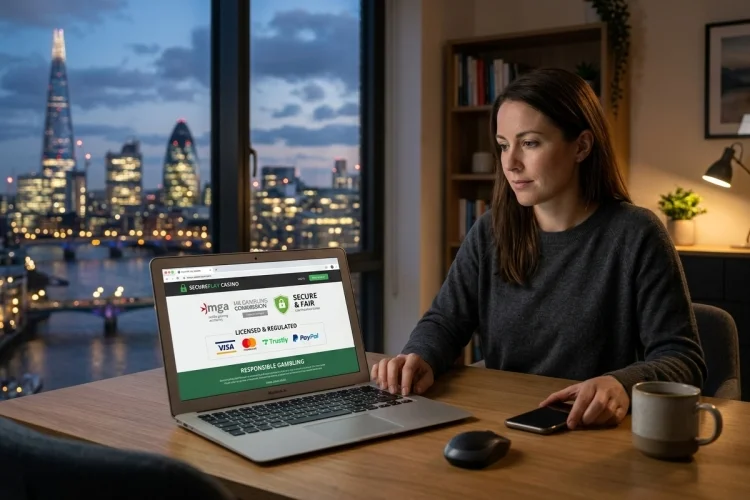
How to Identify a Safe Online Casino Before You Deposit

How to Identify a Safe Online Casino Before You Deposit

Depositing money at an online casino often takes only a few seconds. Recovering funds from an unreliable operator can take considerably longer.

That is why casino safety should be evaluated before entering card details, connecting an e-wallet, or transferring cryptocurrency. Understanding how to identify a safe online casino involves examining the entire player journey.

A trustworthy platform should protect personal information, verify account ownership, explain how withdrawals work, and provide games that meet recognised technical standards. It should also give customers meaningful ways to control their gambling.

Some checks can be completed directly on the website, while others require external verification. Licence details should be compared with an official regulatory register.

Security certificates, testing claims, company information, and dispute-resolution services should also be checked independently.

No single feature proves that a casino is safe. Instead, reliability comes from several consistent signs. When licensing, security, payments, fairness, and customer protection all support each other, players can make a more informed decision.

Start With the Correct Regulatory Jurisdiction

The first question is not simply whether the casino has a licence. It is whether the licence is relevant to the player’s country or region.

For example, businesses offering remote gambling to customers in Great Britain require an appropriate UK Gambling Commission operating licence. The Commission advises players to check the operator through its public register before gambling.

Other jurisdictions have their own regulators and rules. The Malta Gaming Authority provides a register that can be searched by licence holder, authorisation status, website URL, and gaming service.

A foreign licence should not automatically be treated as permission to operate everywhere.

Review the Payment Methods

Safe casinos generally provide clear information about supported deposits and withdrawals. Check whether the same method can be used for both stages and whether the payment account must match the casino account holder’s name.

The cashier should display minimum and maximum amounts, expected processing times, fees, and supported currencies. If the casino accepts deposits through many options but offers only one unclear withdrawal route, investigate further.

Avoid using another person’s card, bank account, or digital wallet. Third-party payments can trigger fraud concerns, ownership disputes, and additional verification.

Study the Withdrawal Policy

Withdrawal terms often reveal more about an operator than its deposit page. Read the policy before sending money and look for clear information about approval times, identification checks, pending periods, and payout limits.

Licensed operators in Great Britain are expected to apply fair and transparent conditions. Regulatory guidance says customers should generally be able to withdraw their deposit balance, even when a bonus is active, unless a restriction is necessary to meet legal obligations.

Be cautious when terms give the casino unlimited discretion to delay payments, cancel winnings, or change requirements after the transaction.

Understand Identity Verification

Legitimate identity checks are not automatically a warning sign. Regulated casinos may need to verify a customer’s name, age, address, and payment ownership to prevent underage gambling, fraud, and financial crime.

UK-licensed remote operators must verify customer identity before allowing the person to gamble. The required information includes the customer’s name, address, and date of birth.

A trustworthy casino should explain its verification process clearly and provide a secure upload portal. It should never ask for passwords, complete security codes, or one-time authentication codes.

Inspect Data and Login Protection

Check that the casino uses HTTPS and that the browser shows the expected domain. Do not open payment or verification links from unsolicited messages without checking them carefully.

CISA recommends watching for subtle misspellings and incorrect domain extensions, which are common signs of phishing websites. It also notes that visual security symbols can be imitated, meaning a padlock alone should not determine trust.

Use a unique password and activate multi-factor authentication when available. Avoid logging into financial or gambling accounts through unsecured public Wi-Fi.

Confirm Game Providers and Testing

Reputable casinos normally identify the software companies supplying their games. Game information pages may display rules, return-to-player percentages, paylines, and bonus-feature details.

Licensed gambling software can be subject to independent testing before release and ongoing performance monitoring. UK Gambling Commission guidance requires relevant testing through approved laboratories and also requires remote operators to monitor live RTP performance.

Testing does not guarantee that a player will win. It indicates that the game is intended to operate according to declared rules and technical standards.

Evaluate Bonus Transparency

A welcome bonus can appear valuable while containing demanding wagering rules, game restrictions, maximum-bet conditions, or expiry dates.

Read the complete promotion terms before accepting. Key conditions should be accessible, specific, and written clearly. UK regulatory guidance states that promotional restrictions should identify prohibited play in advance rather than allowing the operator to invent new violations later.

Treat “guaranteed wins,” risk-free gambling claims, and unusually large bonuses with no visible terms as serious warning signs.

Look for Player-Control Features

A responsible operator should make it easy to set limits or stop playing. Useful controls include deposit limits, session reminders, time-outs, transaction histories, and self-exclusion.

The UK Gambling Commission identifies limit-setting, reality checks, time-outs, payment blocks, and self-exclusion as tools that can help customers manage gambling activity.

These tools are not decorative website pages. Players should be able to find and activate them without contacting a retention team.

Learning how to identify a safe online casino means reviewing what happens before, during, and after a transaction.

Confirm that the website is authorised for your location, then examine its payment methods, withdrawal rules, verification process, technical security, game testing, and bonus conditions.

A safer casino should also provide clear customer support, transaction records, gambling limits, and self-exclusion options.

Never rely solely on advertisements, influencer recommendations, review scores, or a licence logo copied into the footer. Complete your checks before depositing and save copies of the terms that apply to your account or bonus.

Set strict limits on both time and money, and treat gambling only as paid entertainment. When information is missing or contradictory, do not deposit until the operator provides a satisfactory explanation.


How Long Do Casino Withdrawals Take? Delays Explained

How Long Do Casino Withdrawals Take? Delays Explained

A casino withdrawal can feel unusually slow when the deposit was credited almost instantly. Players may see their winnings in the account, request a cash-out, and then wonder why the money has not arrived several hours or days later.

So, how long do casino withdrawals take, and why do some requests take longer than others? The answer depends on more than the chosen banking method.

Every request may pass through balance checks, identity verification, fraud screening, bonus reviews, and payment-provider processing before the funds become available.

A normal delay does not automatically indicate a problem. Card settlements and bank transfers naturally require time, particularly across weekends or national borders.

However, repeated cancellations, unexplained document requests, or timelines that exceed the casino’s published terms deserve closer attention.

By understanding where delays occur, players can separate standard processing from warning signs. They can also prepare their accounts correctly before requesting a payout, reducing the chance that a preventable issue stops the transaction.

Internal Review Is Not the Same as Payment Delivery

The withdrawal clock begins when the player submits a request, but the payment provider may not receive the instruction immediately. The casino first decides whether the funds can be released.

This internal stage may include security, payment ownership, and account checks. BetMGM states that withdrawal requests can undergo an internal review lasting up to five business days before the payment method begins its own processing stage.

By contrast, bet365 states that it aims to process withdrawals within two hours in one jurisdiction, although thorough checks or high demand may extend that period to 48 hours. Processing policies therefore vary significantly between operators and markets.

Incomplete Identity Verification

Verification is one of the most common reasons a casino cash-out remains pending. The operator may request a passport, identity card, proof of address, or evidence showing ownership of the payment account.

The UK Gambling Commission requires licensed remote operators to verify customer age and identity. Its guidance also states that operators should not demand identification only when a customer withdraws if the check could have been completed earlier.

Additional requests may still be permitted when needed to meet legal responsibilities.

Documents may be rejected when information is cropped, blurred, expired, or inconsistent. The name, date of birth, and address should match the casino profile.

Payment Method Ownership Problems

A deposit made with another person’s card, wallet, or bank account can create serious withdrawal difficulties. Regulated operators commonly require the payment method to belong to the registered customer.

Third-party funding makes it harder to determine who owns the money and can create fraud or money-laundering risks.

The UK Gambling Commission has highlighted the risks associated with third-party payment methods and supports closed-loop practices that return funds to the original deposit route where possible.

A player who deposits through an e-wallet may therefore need to withdraw to that wallet before moving the funds to a bank.

Bonus Funds and Withdrawable Balances

A displayed account balance is not always fully withdrawable. Some promotions separate cash funds from bonus credits and require specified conditions before promotional winnings become eligible for withdrawal.

For example, an offer may require the bonus amount to be wagered a defined number of times. Certain games may contribute differently, and maximum-bet restrictions can apply during the promotion.

Players should read the promotion terms before accepting a bonus. When a withdrawal is rejected, checking the cash balance, bonus balance, and wagering progress can clarify whether the issue relates to payment processing or promotion conditions.

Provider and Banking Delays

Once approved, the payment enters the provider’s network. This stage can last from minutes to several business days.

DraftKings lists less than 24 hours for certain PayPal and Venmo payments, compared with three to five business days for card payments. Skrill states that bank withdrawals may take up to five business days, card withdrawals up to three business days, and mobile-wallet withdrawals up to two business days, depending on location.

These are examples, not industry-wide guarantees. Every casino and provider publishes its own limits and estimated delivery times.

Weekends and International Payments

Traditional banking systems often measure transactions in business days. A request made late on Friday may not begin bank settlement until the following Monday.

International payouts may involve correspondent banks, different currencies, and extra compliance screening. Each additional institution can lengthen the journey.

Players should also consider local public holidays in both the casino’s payment region and the receiving bank’s country. A “three-day” transfer may take nearly a week when only working days are counted.

Security Reviews and Unusual Activity

A casino may conduct additional checks when a withdrawal is significantly larger than previous transactions, follows a recent change of payment details, or appears inconsistent with normal account activity.

Payment providers can also hold transfers for review. PayPal states that some withdrawals may be reviewed for up to 72 hours, although many reviews finish sooner.

Players should respond promptly to legitimate requests through the official account portal. They should never share passwords, full security codes, or authentication codes with casino support.

When a Delay Becomes a Warning Sign

A delayed payment becomes more concerning when the operator ignores messages, changes its timeframe repeatedly, or requests additional deposits before releasing existing funds.

Players should verify the casino’s licence directly through the regulator’s public register. They should also save screenshots, confirmation emails, chat transcripts, and copies of requested documents.

When the published deadline has passed, submit a formal complaint through the casino’s stated process. Escalate the matter to the appropriate regulator or dispute-resolution body when the operator fails to provide a reasonable solution.

How long do casino withdrawals take when complications occur? A routine payout may arrive within hours or several business days, while incomplete verification, payment mismatches, bonus conditions, international banking, or security reviews can extend the process.

The best prevention is preparation. Complete identity checks before playing, use payment accounts in your own name, read promotional terms, and review the casino’s withdrawal policy before making a deposit.

When a request is pending, compare its status with the published processing window and answer legitimate document requests promptly.

If the maximum timeframe passes without a clear explanation, contact support and begin the formal complaints procedure. Transparent terms and responsive support are important signs of a trustworthy licensed operator.

Bank Transfer vs E-Wallet Casino Payments: Speed and Cost

Bank Transfer vs E-Wallet Casino Payments: Speed and Cost

A casino payment method should be judged by more than the few seconds required to make a deposit.

The real experience becomes clear only after considering funding fees, exchange rates, casino approval, provider processing, and the time needed to move withdrawn money into a usable account.

That makes bank transfer vs e-wallet casino payments an important comparison for users who want predictable access to their funds.

A bank transfer offers a direct and familiar route. An e-wallet can make checkout feel almost immediate, but it adds another account that may charge for funding, currency conversion, or cashing out.

The fastest option at the casino cashier is therefore not always the cheapest or quickest option overall.

Players should measure the entire cycle: money entering the casino, any verification period, withdrawal approval, provider delivery, and the final transfer back to a bank. This approach reveals the true cost of each method.

Mapping the Complete Transaction Route

A bank payment generally moves from the customer’s account through a domestic or international banking network to the casino. Depending on the country, the transfer may use ACH, SEPA, open banking, or an instant-payment scheme.

An e-wallet adds an intermediary. Funds may move from a bank or card into the wallet, then from the wallet to the casino. The route may reverse during withdrawal.

This extra layer can improve checkout speed while creating another possible fee or conversion point.

Why E-Wallet Deposits Often Win on Speed

Gaming-focused wallets are designed for rapid online payments. Skrill says users can fund a wallet and pay gaming merchants almost instantly, while Neteller describes its online payments as instant.

Once a wallet is funded and verified, the casino may credit the deposit within seconds. Stored payment information also reduces the number of steps needed at checkout.

However, an instant deposit does not guarantee an instant withdrawal. The casino must approve the request before the wallet provider can deliver the money.

When Bank Transfers Can Be Just as Fast

Standard transfers may require one or more banking cycles, especially when different countries, currencies, or intermediary banks are involved. Weekends and bank holidays can create further delays.

Modern instant-payment networks reduce this disadvantage. The European Central Bank explains that instant payments can make funds available within seconds at any time of day, throughout the year.

The cashier label therefore matters. “Bank transfer” may describe a traditional manual transfer or a modern instant bank payment, and those options can have very different timelines.

Withdrawal Approval Changes the Comparison

The largest delay may occur inside the casino rather than at the bank or wallet. Operators can review identity, payment ownership, bonus activity, unusual transactions, or source-of-funds information before releasing money.

Regulated sites should explain withdrawal terms clearly. The UK Gambling Commission states that customers must generally be allowed to withdraw their deposit balance and that any cost-reflective withdrawal fee must be disclosed before they deposit.

After approval, an e-wallet payout may arrive rapidly. A bank payout can still require settlement time, particularly for international transfers.

Comparing Fees and Exchange Rates

Bank-transfer costs may include outgoing fees, receiving fees, intermediary deductions, and foreign-exchange margins. Domestic transfers can be free, but international wires are often less predictable.

E-wallet deposits may appear free at the casino while the provider charges for loading funds, converting currency, or withdrawing to a bank. Skrill confirms that wallet balances can be withdrawn through several routes, including bank, card, and mobile-wallet options, subject to availability.

Calculate the Net Amount

Compare how much money reaches the casino and how much returns to the final account. A small fee charged at two or three stages can cost more than one clearly stated bank charge.

Using the same currency for the casino account, wallet, and bank account may also prevent repeated conversions.

Choosing by Transaction Style

Bank transfers often suit users who make fewer, larger transactions and want money to move directly through their bank. They can also make gambling spending easier to identify on a monthly statement.

E-wallets fit users who prioritise fast deposits, mobile access, and convenient authentication. They work best when the casino supports the same wallet for withdrawals and when the wallet’s funding and cash-out charges are reasonable.

Players making frequent transactions should pay particular attention to percentage-based charges, as small fees can accumulate over time.

In the bank transfer vs e-wallet casino payments comparison, speed and cost must be measured from the first funding step to the final withdrawal.

E-wallets usually provide the smoothest deposit experience and may deliver quick payouts after casino approval. Bank transfers offer direct access, potentially higher limits, and competitive speed where instant banking is available.

Before depositing, review the casino’s pending period, transaction limits, supported withdrawal route, and verification requirements. Then compare the provider’s funding, conversion, and cash-out charges.

Use a payment account in your own name and set a fixed budget in advance. The most efficient method is the one that remains transparent throughout the complete payment cycle.