
How Live Casino Game Results Are Recorded from Table to Screen

How Live Casino Game Results Are Recorded from Table to Screen

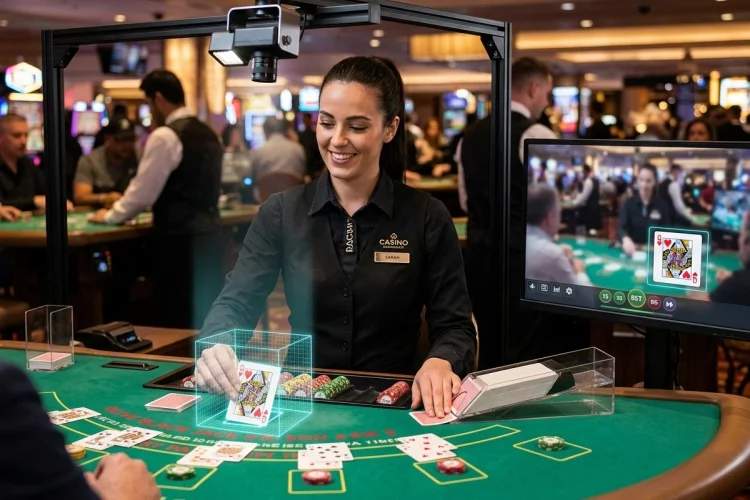
A live blackjack dealer turns over a card, and almost immediately its value appears on your screen.

A roulette ball settles into a pocket, and the interface identifies the winning number while calculating payouts. It all looks instant, but several systems are working behind the scenes.

Understanding How Live Casino Game Results Are Recorded means following the journey from a physical event at a studio table to digital information stored by the gaming platform.

The exact technology varies between providers, but recognition systems, game software, transaction records, surveillance, and account histories all help connect what happens on camera with the final result.

The Result Begins With a Real Physical Event

Unlike an RNG-only digital table game, a traditional live casino round starts with physical equipment.

A dealer may draw cards from a shoe, spin a roulette wheel, or manage another real-world game device inside a studio. Cameras stream that action to players in real time.

The physical event determines the basic result. In roulette, for example, the relevant outcome is where the ball finally settles. In blackjack, the values of the physical cards dealt determine the hands.

Regulatory standards recognise this distinction. The UK Gambling Commission requires live dealer operations to be fair and independently auditable, with appropriate equipment, trained croupiers, supervision, and game records.

The digital system then needs to translate that physical outcome into information that software can process.

The Physical Outcome Has to Become Digital Data

Watching a card on video is not enough for an online platform.

The software needs machine-readable data such as “King of Hearts,” “Player total 19,” or “Roulette result 24.”

Different providers can use different technical implementations, including scanners, sensors, video-recognition systems, integrated table equipment, or combinations of these technologies.

A useful public example comes from Evolution’s Speed Roulette. Evolution says the product uses video-based winning number recognition, allowing the system to capture the winning roulette number quickly before the next round begins.

That does not mean every live casino game uses exactly the same technology. The important idea is that the physical result must be converted into digital information before bets can be processsed automatically.

The Betting System Matches Results With Player Wagers

Once the result has entered the digital platform, the betting engine can compare it with wagers placed before betting closed.

Imagine a simplified roulette round.

A player places $5 on red and $2 on number 17. Once the physical wheel produces its result and that outcome is registered digitally, software checks each valid wager against the game’s payout rules.

The result is then used to calculate whether each bet won or lost and how much should be credited.

The livestream and betting interface therefore perform different jobs. Video lets the player watch what happened, while the digital layer records bets, understands the result, and settles the financial outcome.

Pragmatic Play describes its live platform as combining video-streaming infrastructure with a back-end system providing operators visibility into table settings, reporting, operational notifications, and other controls.

Game Logs Create a Record of What Happened

A live result does not simply disappear when the next round begins.

Game logs can create a structured record of events associated with each table and round.

The UK Gambling Commission specifically says live dealer studios should maintain game logs and collate game events into statistics that can be analysed for trends connected with game performance, staff, or gaming locations.

That record is useful for several reasons.

Operators can investigate unusual behaviour, review performance, reconcile disputes, and check whether game procedures have been followed properly.

A log is different from a player’s visual memory of the round. It provides system-level information that can be examined later rather than relying on someone remembering what appeared on screen.

This creates a more transparant audit trail around live play.

Video Surveillance Adds Another Layer of Evidence

Digital logs are only one part of live casino recording.

Video can provide another important record because the game itself takes place physically.

UK regulatory guidance states that video surveillance should record dealer activity in enough detail to determine whether dealing procedures and game rules were followed. It also calls for supervision of dealer activity and protection of secure gaming areas.

Suppose a player questions whether a blackjack card was handled correctly.

The system record might show the digital value registered for the hand. Video footage can provide evidence of what physically happened at the table.

This combination is much more useful than relying on a single information source.

Some live roulette products even display slow-motion footage to players. Evolution’s Immersive Roulette, for example, provides high-frame-rate slow-motion replay of the ball settling into the winning number.

Your Account History Records the Financial Side

Players also need access to information about their own gambling activity.

That is slightly different from the studio’s internal game log.

In Great Britain, remote gambling customers must have easy access to at least three months of account and gambling history, while a minimum of 12 months must be available on request. Relevant history should include bets placed, results, and winnings paid.

So a live casino result can exist at several levels.

The studio may maintain operational game records. The gambling platform keeps transaction data. The player’s account history shows the financial effect of the round.

These records should generally agree with each other, although the amount of detail visible directly to a player may be less than what exists in back-end systems.

That distinction is important when someone needs to investigate a disputed hand or spin.

Security Matters Because Results Affect Real Balances

Recorded results are financially important information.

If someone could alter a result after a round, they could potentially affect player balances, payouts, and historical records.

That is why systems storing and processing game outcomes are treated as sensitive infrastructure.

UK Gambling Commission security requirements specifically include electronic systems that store game results or the current state of a customer’s gamble among the critical systems covered by its security framework.

Security controls also apply to systems handling customer balances, authentication information, and communication with other critical infrastructure.

In other words, recording a roulette number is not simply about updating an animation on screen. That number can trigger real financial transactions, so its accuraccy and integrity matter.

What Happens If a Result Looks Wrong?

A delay between video and the digital interface does not automatically mean the game result itself is incorrect.

Live casino depends on cameras, streaming infrastructure, internet connections, game servers, and user interfaces. Different parts of that chain can experience small delays.

What matters is whether the authoritative game record correctly reflects the physical outcome and the player’s accepted wager.

If something genuinely looks wrong, record practical details: table name, approximate time, game round identifier if available, bet amount, and screenshots.

Do not rely only on the result history displayed visually in the lobby. Contact the operator so it can compare account transactions with the relevant game data and, where appropriate, studio records.

A properly recorded game provides information that can be reviewed rather than leaving the dispute as one person’s word against another.

Understanding How Live Casino Game Results Are Recorded reveals that a single round involves much more than a video feed.

Physical outcomes are translated into digital data, matched with bets, stored in game and account records, and supported by surveillance and security controls.

Next time you play a live table, check the game history and account records available to you – they are part of the system connecting the real table to your screen.


Branded Slots vs Original Slots: Which Delivers Better Gameplay?

Branded Slots vs Original Slots: Which Delivers Better Gameplay?

A slot based on a famous movie can instantly feel more interesting than a game featuring characters you have never seen before.

Familiar music, recognizable scenes, and popular personalities create an immediate connection. But does a famous licence actually make the gameplay better?

The Branded Slots vs Original Slots comparison becomes more interesting once you move beyond graphics. Both categories can deliver excellent mechanics, weak features, strong bonus rounds, or forgettable gameplay.

To understand which option suits you better, it helps to compare what each type can offer in terms of immersion, creativity, mathematical design, and replay value.

What Are Branded Slots?

Branded slots are games built around intellectual property that already exists outside the slot itself. The theme might come from a film, television series, musician, celebrity, game show, or another recognizable entertainment property.

For example, IGT’s portfolio includes licensed games connected with well-known properties, while its Wheel of Fortune Slots franchise celebrated its 30th anniversary in 2026.

IGT describes Wheel of Fortune as an early licensed slot concept that developed into a long-running gaming brand.

Playtech has similarly developed slots using licensed DC entertainment properties, incorporating characters, footage, and familiar elements from those franchises.

The attraction is obvious: players already know the world before the first spin begins.

What Makes an Original Slot Different?

Original slots use themes and intellectual property developed specifically for the game or provider.

A developer might create its own fantasy kingdom, mythology-inspired universe, fruit-machine concept, animal characters, or futuristic environment. Some of these titles eventually become recognizable brands of their own.

Games Global, for example, lists numerous proprietary slot franchises alongside a separate category of branded titles.

Without an external franchise to reproduce, developers may have more freedom to design symbols, characters, animations, and bonus mechanics around the mathematical structure of the slot.

That freedom does not guarantee quality. However, it can allow an original title to build its entire presentation around a particular mechanic instead of fitting the mechanic into an existing entertainment licence.

Familiarity Gives Branded Slots an Immediate Advantage

The biggest strength of a licensed slot is usually familiarity.

Imagine choosing between an unfamiliar game and one featuring a television programme you have watched for years. The branded title already carries characters, visual language, music, and emotional associations that the developer does not need to introduce from scratch.

That can make the first session feel more engaging.

Some branded games use actual footage, recognizable audio, or famous imagery. Playtech’s Batman titles, for example, incorporated footage and catchphrases associated with the classic television series while connecting those elements with bonus and jackpot mechanics.

This can make a slot feel more like interactive entertainment than a generic reel game.

However, familiarity can also hide fairly ordinary mechanics. A famous character does not automatically make a basic free-spins feature innovative.

Original Slots Often Have More Room to Build Around Mechanics

An original game does not need to recreate a particular film scene or protect the identity of a licensed character.

That can give designers more room to build the theme around the mechanic itself.

Suppose a developer wants a bonus where the entire reel grid changes shape during play. With an original concept, the characters and environment can be designed specifically around that transformation.

A licensed title can also include innovative mechanics, but the creative team may need to keep the experience consistent with the source material and licensing agreement.

This makes the branded-versus-original comparision less about which category is universally better and more about where the design process begins.

Branded slots often begin with recognizable intellectual property. Original games can begin with the mechanic, visual concept, or mathematical model and build outward from there.

RTP and Volatility Matter More Than the Theme

A common mistake is choosing a slot almost entirely because of its branding.

From a gameplay perspective, RTP and volatility may matter far more.

RTP represents the game’s theoretical long-term return, while volatility helps describe how widely results can vary.

Two beautifully designed branded slots can therefore provide completely diferent experiences if one distributes prizes relatively frequently while the other concentrates more value in rare outcomes.

Regulated games must provide information about how they work and either RTP, house edge, or relevant probabilities where applicable. The UK Gambling Commission specifically requires accessible information about game rules and the likelihood of winning.

The same technical standards apply regardless of whether a game features a famous entertainment licence or an original dragon created by the developer.

Branding changes presentation. It does not remove the underlying mathematics.

Bonus Features Can Make or Break Either Type

Gameplay quality often becomes clearest once the bonus mechanics appear.

A branded title has an opportunity to connect its features to moments from the original entertainment property. A film-themed slot might turn a famous chase scene into a pick feature, while a music-based game could use songs or performance imagery during free spins.

When this works, branding and mechanics reinforce each other.

When it does not, the brand can feel like decoration pasted onto an otherwise standard slot.

Original titles face a different challenge. Players have no existing attachment to the characters, so the mechanics themselves often need to create the excitement.

Developers may rely on expanding symbols, cascading reels, multipliers, collection systems, jackpots, transformations, or other mechanisms to establish an identity.

Neither approach is automatically superior. What matters is whether the bonus feature feels connected to the core game instead of appearing as an unrelated interruption.

Does a Famous Brand Mean Better Production Quality?

Not necessarily, although large licensed projects can certainly receive polished visual treatment.

Licensed brands often come with strong recognizable assets. IGT, for example, describes licensed properties as part of its premium gaming portfolio, alongside progressive and proprietary titles.

Yet production value should not be confused with gameplay depth.

A beautifully animated celebrity slot may still have a very simple mathematical structure. Meanwhile, an original title with less recognizable artwork could contain deeper feature interactions and more interesting bonus progression.

There is also no reason to assume branded slots are inherently more trustworthy.

In regulated markets, gambling software must comply with applicable technical and testing requirements regardless of its theme. UK Gambling Commission rules require relevant gambling software to meet remote technical standards and undergo testing before being offered to customers.

A superhero licence cannot replace technical compliance.

Which Type Has Better Replay Value?

Replay value depends heavily on what keeps a player interested.

Someone who enjoys a particular franchise may return to a branded game because the soundtrack, characters, and atmosphere remain entertaining. Nostalgia can be powerful, especially when a game uses the original property effectively.

Original slots often need to earn replay value through mechanics.

A strong original game might introduce evolving bonus states, different feature combinations, unusual reel layouts, or distinctive visual storytelling. If those systems are interesting enough, the game itself can eventually become a recognizable brand.

IGT has even noted that some of its in-house titles have developed into brands in their own right.

This shows why the boundary between the two categories is not always permanent from a player’s perspective. Today’s unknown original concept could become tomorrow’s familar slot franchise.

So Which Offers Better Gameplay?

There is no universal winner.

Branded slots work especially well when the licence adds something meaningful: authentic visuals, recognizable audio, creative bonus sequences, or a theme the player genuinely enjoys.

Original slots may be more appealing when the priority is unusual mechanics, new visual worlds, or designs unconstrained by an external franchise.

Instead of choosing only by category, compare the game information itself. Check RTP, volatility if provided, paylines or ways-to-win structure, bonus mechanics, maximum prize, and feature rules.

A recognizable name can attract your attention, but those details determine how the game actually plays.

The Branded Slots vs Original Slots debate has no simple winner. Licensed games can provide powerful familiarity and immersion, while original titles often have greater freedom to build a unique identity around their mechanics.

Before choosing, look beyond the artwork. Compare RTP, volatility, features, and game rules, then pick the style that provides the entertainment experience you actually prefer.

What Makes an Online Casino Reliable and Trustworthy? 7 Signs That Matter

What Makes an Online Casino Reliable and Trustworthy? 7 Signs That Matter

A polished website, thousands of games, and an impressive welcome offer can make almost any online casino look convincing. Unfortunately, appearance tells you very little about how the operator actually handles money, personal information, disputes, or game fairness.

So, what makes an online casino reliable and trustworthy? The strongest clues come from things that can be checked rather than marketing promises.

Licensing, independent testing, transparent terms, payment policies, security controls, and responsible gambling tools all reveal how seriously an operator treats its customers.

1. A Verifiable Gambling Licence Comes First

A gambling licence is one of the clearest starting points when evaluating an online casino. However, simply displaying a regulator’s logo in the footer is not enough.

Players should verify the licence through the regulator itself. For example, the UK Gambling Commission maintains a public register showing licence status, legal business names, trading names, domains, and certain regulatory actions.

UKGC-licensed remote businesses are also expected to display licensing information on their websites.

Other jurisdictions have their own regulatory systems, so standards can differ significantly.

The important lesson is to check whether the casino’s stated licence actually corresponds with its domain and operating company. A licence number that cannot be independently verified deserves caution.

2. The Operator Is Transparent About Who Runs the Casino

Reliable operators usually make it relatively easy to identify the company behind the website.

Look for the legal company name, licence information, registered details, customer-service channels, terms and conditions, and privacy policies. These pieces of information should fit together rather than appearing on unrelated pages with conflicting details.

Transparency also applies to contractual rules. In Great Britain, licensed operators must make gambling terms easily accessible and ensure they are fair and transparent under applicable consumer law.

A casino that explains important conditions clearly is generally easier to evaluate than one hiding significant restrictions inside confusing legal language.

Watch for vague wording about confiscating winnings, closing accounts, or changing rules at the operator’s “sole discretion.” Transparant conditions should explain both the rule and its consequences.

3. Games Are Tested and Operate Under Technical Standards

Casino games should not simply ask players to trust that the software works properly.

Regulated markets can require gambling software and systems to comply with technical standards and independent testing procedures.

The UK Gambling Commission’s remote technical framework, for example, includes requirements covering game systems, random-number generation, testing, and security.

Independent testing organisations can add another layer of assurance. eCOGRA says its certification work covers RNG-driven games, random-number generators, casino platforms, internal control systems, and information-security systems.

Players should still remember that independent testing does not mean they will win. It means the game is being assessed against defined technical or regulatory requirements.

Fair randomness and profitable gambling are two seperate ideas.

4. Security Covers More Than the Padlock Icon

Seeing HTTPS in the browser is useful, but casino security goes much further than an encrypted webpage.

Operators hold sensitive information including names, account credentials, balances, identity documents, and potentially payment data. A trustworthy casino therefore needs proper controls around how this information is stored, transmitted, and accessed.

UKGC technical security requirements cover critical systems handling authentication data, customer balances, card details, random numbers, game results, and communication networks containing sensitive customer information.

Its testing strategy also includes third-party annual security audits against specified sections of ISO/IEC 27001:2022.

From a player’s perspective, useful signs include clear privacy information, sensible account-security options, and a professional verfication process rather than requests for documents through suspicious channels.

5. Deposits and Withdrawals Have Clear Rules

Depositing money is usually easy. Withdrawals tell you much more about an operator.

Before funding an account, check minimum withdrawal amounts, processing procedures, payment methods, identification requirements, possible fees, and any restrictions connected with bonus funds.

Trustworthy operators explain these rules in advance instead of introducing unexpected conditions only after a player requests payment.

Protection of customer funds is another area worth understanding.

Under UKGC rules, operators holding customer money must tell customers whether those funds are protected if the business becomes insolvent, what level of protection applies, and how that protection is achieved.

Different jurisdictions have different requirements, so never assume every licensed casino protects balances in exactly the same way.

6. Customer Support Has a Real Complaint Process

Friendly live-chat messages are useful, but reliability becomes much clearer when something goes wrong.

A trustworthy operator should provide an understandable complaints procedure and tell customers how unresolved problems can be escalated.

For UKGC-licensed businesses, complaints must be handled through fair, open, and transparent procedures. If an eligible dispute remains unresolved, customers must have access to an approved Alternative Dispute Resolution provider under the applicable rules.

That creates an important layer of accountability beyond ordinary customer support.

Before depositing, check whether the casino explains its complaint process and identifies the relevant independent dispute channel. Finding nothing except a generic contact form is not a particularly strong trust signal.

7. Responsible Gambling Tools Are Easy to Find

A trustworthy casino should not measure success purely by how long customers continue gambling.

Responsible gambling systems are an important part of modern regulated markets. Depending on the jurisdiction, operators may be required to provide tools such as deposit limits, wagering limits, reality checks, time-outs, and self-exclusion.

The Malta Gaming Authority, for example, requires licensed operators to provide accessible self-exclusion and certain limit-setting tools. It also requires responsible gaming information and links to support resources to be displayed prominently.

This matters because player protection should work when somebody wants to reduce or stop gambling – not only when the casino wants them to deposit again.

A reputible operator makes these controls straightforward to locate and use.

So, what makes an online casino reliable and trustworthy? No single badge or feature provides the answer.

Reliability comes from a combination of verifiable licensing, tested games, strong security, clear withdrawals, fair terms, genuine complaint procedures, and effective player-protection tools.

Before creating an account, verify these details independently. Ten minutes of checking can reveal far more about a casino than any welcome bonus ever will.

How Video Poker Payout Tables Work: A Beginner-Friendly Guide

How Video Poker Payout Tables Work: A Beginner-Friendly Guide

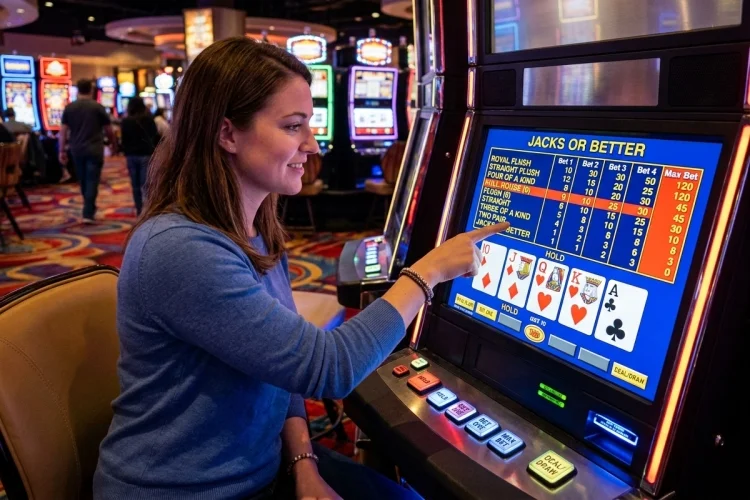
Video poker can look like a slot machine at first, but the information displayed above the cards is much more important than decoration. That grid of hands and numbers tells you exactly which final combinations qualify for prizes and how much each one pays.

Understanding How Video Poker Payout Tables Work is useful because two machines with nearly identical graphics can offer noticeably different mathematical returns.

Once you know how to read poker hands, bet columns, and common labels such as 9/6 Jacks or Better, comparing different versions becomes much easier.

What Is a Video Poker Payout Table?

A payout table, or paytable, lists the winning poker hands available in a particular game and the amount paid for each one.

In Jacks or Better, a typical list begins with a pair of Jacks or higher and progresses through Two Pair, Three of a Kind, Straight, Flush, Full House, Four of a Kind, Straight Flush, and Royal Flush.

A standard full-pay 9/6 Jacks or Better schedule pays 9 units for a Full House and 6 for a Flush, while other common hands pay 4 for a Straight, 3 for Three of a Kind, 2 for Two Pair, and 1 for Jacks or Better.

Those numbers are not probabilities. They describe the payout relative to the amount wagered.

That distinction is essential when reading the table correctly.

Why Games Are Called 9/6 or 8/5

Video poker players often describe a machine with shorthand such as 9/6 Jacks or Better.

The first number normally refers to the Full House payout, while the second refers to the Flush.

So a 9/6 version pays 9 units for a Full House and 6 for a Flush. An 8/5 version pays only 8 and 5 for those same hands.

That may appear like a very small difference.

Mathematically, however, those frequent hands contribute significantly to the game’s theoretical return.

Wizard of Odds calculates a maximum theoretical return of about 99.54% for 9/6 Jacks or Better with optimal play. A common 8/5 version falls to around 97.3%.

This is why reading the paytable matters more than simply recognising the game’s title.

How the Coin Columns Work

Classic video poker machines often display several payout columns.

These traditionally represent wagers of one, two, three, four, or five credits.

Suppose the Flush row pays 6 credits for each credit wagered. The table might therefore show 6, 12, 18, 24, and 30 across the five columns.

Most ordinary hands increase proportionally.

If Three of a Kind pays three credits per unit, betting two credits returns six, while five credits returns fifteen.

This makes the table relatively easy to understand.

However, one important hand often breaks that proportional pattern: the Royal Flush.

That exception is why checking every column is useful rather than assuming all payments scale identically.

Why the Royal Flush Column Looks Different

In many traditional video poker schedules, a Royal Flush receives a disproportionately larger payment at the maximum five-credit wager.

A classic Jacks or Better table can show Royal Flush payments of 250, 500, 750, 1,000, and then 4,000 credits from one through five credits.

Notice the jump.

Four credits produce 1,000, but five credits produce 4,000 rather than 1,250.

That is a special maximum-credit bonus built into the payout schedule.

Wizard of Odds calculates that playing fewer than the maximum coins on this classic structure reduces the theoretical return by roughly 1.36 percentage points because the Royal Flush pays only 250 per coin instead of 800 per coin.

That does not mean players should increase a wager beyond their budget. If a machine uses this structure, selecting a lower coin denomination can be a more sensible way to understand the same mechanic without stretching spending.

Winning Hands Must Match the Game Variant

Not every video poker game pays the same hands in the same way.

Jacks or Better uses a pair of Jacks, Queens, Kings, or Aces as its lowest normal winning hand.

Deuces Wild works differently because all twos act as wild cards. Bonus Poker and Double Double Bonus may pay additional amounts for particular Four of a Kind combinations.

Therefore, copying one payout table and applying it to another game would be a mistake.

The rules and paytable should be read together.

UK Gambling Commission standards require applicable rules, potential payouts, and information about the likelihood of winning to be accessible before customers gamble. Paytables are specifically identified as one acceptable way of communicating potential prizes.

That makes the paytable the practical starting point for understanding a new variant.

Payout Tables and Strategy Are Connected

Video poker differs from a standard slot because the player makes a decision after receiving the first five cards.

You decide which cards to hold and which to discard.

The best choice depends partly on what the paytable rewards.

For example, imagine being dealt four cards toward a Flush plus a low pair.

In full-pay Jacks or Better, the expected value of drawing toward the Flush can make that choice preferable under the correct circumstances. Strategy charts are calculated by comparing the expected returns of all possible holds.

Change the paytable and some borderline decisions can change as well.

That is why using a strategy created for one version on a substantially different payoutt schedule may not be mathematically exact.

Paytable and strategy are connected rather than completely seperate parts of the game.

How Payout Tables Affect RTP

Return to player, or RTP, represents the theoretical long-run portion of money wagered that is returned as prizes.

In video poker, RTP depends on both the payout schedule and how the player makes decisions.

The UK Gambling Commission notes that RTP involving skill should be calculated using an autoplay strategy or a standard or published strategy.

This is especially relevant to video poker.

A 9/6 Jacks or Better paytable has a theoretical return of approximately 99.54% when played optimally.

That figure is not a guarantee for one session.

RTP is a long-term average rather than a promise that $100 wagered today will return exactly $99.54. Gambling Commission guidance similarly explains that theoretical RTP is achieved over a large number of game plays rather than every individual session.

Why Small Payout Changes Matter

Reducing a Full House payout from 9 to 8 may seem minor.

Reducing the Flush from 6 to 5 may also look small.

But these hands occur far more frequently than Royal Flushes.

A Royal Flush is extremely rare, while Full Houses and Flushes contribute repeatedly to long-run returns.

That is why changing recurring mid-level payouts can noticeably alter a game’s mathematical profile.

Wizard of Odds lists 9/6 Jacks or Better at roughly 99.54%, while 8/5 is about 97.3% under optimal play.

The graphics may be identical.

The mathematical value is not.

Checking only the jackpot and ignoring the middle of the paytable is therefore an easy mistake.

Payout Tables Can Also Change Variance

RTP tells you the average theoretical return, but it does not describe exactly how prizes are distributed.

Variance measures how widely results can fluctuate.

For example, standard 9/6 Jacks or Better has lower variance than some bonus-oriented games such as Double Double Bonus because the latter concentrates more return in larger Four of a Kind prizes. Wizard of Odds lists notably different variance figures across these games.

Two games can therefore have fairly similar theoretical returns yet feel very different during a session.

One may deliver more frequent modest wins, while another depends more heavily on rarer premium hands.

This is another reason not to judge video poker from RTP alone.

Check the Table Before Pressing Deal

Before playing any unfamiliar version, look at the paytable first.

Confirm the lowest winning hand, Full House and Flush values, Four of a Kind rules, Royal Flush payout, and whether special bonus hands exist.

Also check the denomination and total wager.

A table displayed in credits can be misleading if you forget how much each credit is worth.

Five credits at $0.25 each means a $1.25 total wager. Five credits at $1 means $5.

The poker hand is the same, but the cash amount is obviously different.

Knowing both the credit payout and denomination prevents basic confussion about what a displayed prize actually means.

Understanding How Video Poker Payout Tables Work makes it easier to compare games before playing. The paytable shows which hands qualify, how many credits they pay, and whether special maximum-credit bonuses apply.

Small changes such as 9/6 becoming 8/5 can materially change theoretical RTP. Before dealing a hand, read the payout schedule, check the denomination, and make sure the strategy matches the exact version.

How Much Data Do Mobile Casino Games Use? A Practical Guide

How Much Data Do Mobile Casino Games Use? A Practical Guide

Playing a casino game on your phone does not necessarily consume huge amounts of mobile data. A basic slot can exchange relatively small amounts of information, while a live blackjack table may continuously stream video and use dramatically more.

So, How Much Data Do Mobile Casino Games Use? There is no universal number because consumption depends on the game, graphics, video quality, session length, and whether additional content is downloaded.

As a practical rule, standard casino games are relatively light, while live dealer products behave more like video-streaming services.

Mobile Slots Usually Use Relatively Little Data

Mobile slot games generally do not need to download a completely new game every time the reels spin.

After the initial assets have loaded, the game mainly exchanges information such as wager requests, game results, balance updates, and occasional additional graphics or sounds.

Third-party casino testing published in 2026 estimates that typical mobile slots may use roughly 5–30 MB per hour, although individual titles can differ significantly.

That would make slots considerably lighter than ordinary video streaming.

For example, a two-hour slot session using 20 MB per hour would consume around 40 MB. With a 5 GB mobile plan, that amount is fairly small.

However, the first time you open a graphics-heavy slot may require more data because images, animations, sounds, or other assets need to be downloaded.

Digital Blackjack and Roulette Are Usually Light Too

Computer-generated blackjack, baccarat, roulette, and similar table games generally work more like ordinary online games than streaming video.

The phone sends your wager and receives information about the result. Graphics and animations are often processed locally after their assets have been loaded.

Microsoft notes that general online games commonly use around 100 MB per hour, although actual consumption varies by title, platform, and activity.

Many simple casino table games can fall below that figure because they exchange relatively small packets of game information.

A virtual roulette game, for instance, does not necessarily need to download a full video stream every second. It can display a locally rendered wheel while the server manages the actual gaming session.

This makes digital tables more data-friendly than their live dealer equivalents.

Live Dealer Games Use Much More Data

The biggest jump occurs when you open live blackjack, roulette, baccarat, or a casino game show.

These games include continuous video streaming.

The casino needs to send images of the dealer, table, cards, wheel, studio, and other live content to your phone throughout the session.

Direct casino-industry estimates commonly put live dealer consumption around 200-500 MB per hour, depending largely on video quality and the provider’s compression settings.

That means one hour of live baccarat could potentially use as much data as many hours of basic slot play.

For perspective, Netflix states that its low-quality streaming setting can use up to about 0.3 GB per hour, while standard-definition and HD video can consume substantially more.

A live casino stream is not identical to Netflix, but the comparison explains why video dominates mobile data consumption.

Video Quality Changes the Number Dramatically

A live dealer stream running at lower resolution needs less bandwidth than a sharper HD feed.

The difference can be significant.

If a casino platform automatically adjusts resolution based on your connection, a strong 5G signal might cause it to deliver higher-quality video and therefore use more data.

Apple makes a similar distinction at the operating-system level. On compatible iPhones, the “Allow More Data on 5G” setting can permit higher-quality video and other network-heavy services.

This explains why two people playing the same live game for one hour might not report identical usage.

One could receive a compressed standard-quality stream while the other receives higher bitrate video.

If the casino provides manual video settings, reducing the resolution is one of the most effective ways to reduce consumption.

The First Game Load Can Use More Data

Hourly averages can be misleading if you only play for ten minutes.

Suppose a game needs to download 15 MB of assets when first opened.

If you then play for three hours, that initial download becomes a minor part of the total. But if you play for only five minutes, it represents most of your session’s data consumption.

Modern slots can include high-resolution backgrounds, character animations, sound files, bonus scenes, and special effects.

Browser caching or application storage can sometimes prevent all of these resources from being downloaded again.

However, updates or cleared caches may force the game to retrieve them again.

This is why short sessions can occasionally appear surprisingly data-heavy when you inspect your phone statistics afterward.

Browsing the Casino Lobby Also Uses Data

Gameplay is not the only activity consuming bandwidth.

Casino lobbies can contain hundreds of game thumbnails, promotional banners, animations, account information, recommendation feeds, and sometimes video previews.

Scrolling through several pages may download a large collection of images.

Still, simple lobby browsing is normally much lighter than continuous live streaming.

The main exception occurs when the platform automatically plays promotional or game-preview videos.

Those clips can quickly increase usage because video transfers far more information than static images.

Turning off autoplay where possible can therefore make a noticable difference.

The same principle applies to promotional videos embedded in casino apps or mobile websites.

Native Apps and Browser Casinos Can Use Different Amounts

A native casino app may already contain some interface assets on the device.

That can reduce repeated downloads during normal use.

A browser-based casino, however, can cache images, scripts, and other resources too, so the difference is not always dramatic.

App updates are another factor.

Downloading a large casino app update over mobile data could use more bandwidth than several hours of normal slot play.

General online gaming follows a similar pattern: Microsoft notes that downloading games and updates can consume far more data than ordinary active gameplay.

Whenever possible, download large apps and updates over trusted Wi-Fi.

That leaves your cellular allowance for actual gameplay.

Background Data Can Quietly Add to Usage

Apps can sometimes access the internet even when you are not actively playing.

Background activity may support notifications, updates, account synchronization, or other services.

Google explains that Android applications can download information and deliver notifications through background data even when the app is not currently being used.

Android’s Data Saver can restrict much of this background traffic when cellular data is being used.

Apple offers a similar Low Data Mode on iPhone, which reduces automatic updates and background network activity.

These settings will not dramatically reduce an active live casino stream, but they can reduce unrelated traffic running beside your game.

How to Calculate Your Own Casino Data Usage

The best number is the one from your own device.

Different providers, games, phones, and quality settings create too much variation for one universal estimate.

On iPhone, Apple allows users to view how much cellular data individual apps consume under Settings > Cellular. Usage statistics can also be reset before a test session.

On supported Android devices, data-use screens can show cellular consumption by application and allow users to set warnings or limits.

Try resetting the statistics, playing one game for 30 or 60 minutes, and checking the result.

That gives you a much more accurate personal estimate than a generic online average.

How Much Data Would a Month of Play Use?

Consider a hypothetical player who spends one hour per day on ordinary slots using approximately 20 MB per hour.

Over 30 days, that would equal around 600 MB.

Now consider one hour of live dealer gaming per day at 300 MB per hour.

That would equal roughly 9 GB per month.

The difference is enormous.

Someone alternating between the two could fall somewhere in the middle.

These are only examples, not guaranteed figures. The actual result depends on streaming quality, loading behaviour, background traffic, and the individual provider.

The key insight is that game type matters far more than the casino theme or betting size.

A $1 live blackjack wager can consume more internet data than a $10 slot spin because video – not stake size – is what drives bandwidth.

Simple Ways to Reduce Casino Data Usage

Use Wi-Fi for live dealer sessions whenever a trusted network is available.

Lower streaming quality if the platform gives you that option, and avoid leaving a live table open while you are doing something else.

Download app updates over Wi-Fi.

You can also activate Low Data Mode on iPhone or Data Saver on supported Android devices to limit unnecessary background activity. Apple notes that its Low Data Mode reduces background network use, while Google’s Data Saver restricts most background cellular access.

Checking usage once in a while is also useful.

A game consuming much more data than expected may be streaming additional content, repeatedly downloading assets, or running background functions.

The answer to How Much Data Do Mobile Casino Games Use? depends mainly on the game format. Basic slots and virtual table games are usually light, while live dealer games can consume hundreds of megabytes per hour because of continuous video.

Check your phone’s actual usage statistics, lower video quality where possible, and use Wi-Fi for longer streaming sessions if your cellular allowance is limited.

Warning Signs of a Fake Casino Website: 9 Red Flags to Check

Warning Signs of a Fake Casino Website: 9 Red Flags to Check

A fake casino website does not always look obviously fake. Modern scam sites can have polished graphics, hundreds of games, live chat buttons, impressive bonuses, and even copied licence logos.

Knowing the Warning Signs of a Fake Casino Website is therefore more useful than judging a platform by appearance alone.

The strongest clues usually involve licensing, domain information, payment methods, withdrawal rules, identity checks, security, and customer support.

Before depositing money or uploading identification, take a few minutes to verify what is actually behind the casino brand.

1. The Licence Cannot Be Independently Verified

A casino claiming to be licensed is not enough.

Fake or unlicensed websites can copy regulator logos, licence numbers, or legal wording from legitimate operators. The safest approach is to verify the operator through the regulator’s own database.

For example, the UK Gambling Commission’s public register allows searches by business name, trading name, and domain. It also displays licence status and regulatory information.

Compare the exact website domain with the domain recorded by the regulator.

A licence belonging to a similar-looking company does not automatically cover another website.

If you cannot identify who regulates the platform or the licence number leads nowhere, treat that as a serious warning sign.

2. The Domain Looks Almost Right

Scammers often benefit from familiarity.

A fake casino domain may differ from a legitimate one by only a letter, extra word, unusual extension, or misplaced character.

For example, a fraudulent site might replace a letter with a similar-looking character or add words such as “official,” “vip,” or “secure.”

The FTC warns that scammers can create websites and search listings that appear connected to trusted companies. Paid search results can also direct users toward misleading sites, so appearing near the top of a search engine is not proof of legitimacy.

Type known website addresses directly when possible, and inspect the domain carefully before entering passwords or financial information.

A professional design cannot compensate for the wrong URL.

3. There Is No Clear Company Behind the Website

Legitimate regulated gambling operators normally identify the legal business responsible for the service.

Look in the footer, terms and conditions, privacy policy, and licensing section.

You should be able to find information such as the company name, regulatory details, contact information, and applicable jurisdiction.

A fake casino may provide only a brand name without identifying who actually operates it.

Other suspicious signs include inconsistent company names across pages or an address that appears unrelated to the gambling business.

Do not assume a long legal-looking paragraph proves anything.

Copying corporate text from another website is easy.

If the ownership details feel deliberately vague, do more research before creating an account.

4. Deposits Are Easy but Withdrawals Are Mysterious

A suspicious casino often explains how to deposit money in great detail while saying very little about withdrawals.

Before depositing, search for minimum withdrawal amounts, processing conditions, identity requirements, fees, and supported payout methods.

A legitimate verification process is not automatically suspicious. Regulated operators may have legal obligations to verify identity.

The warning sign appears when the rules suddenly change after you win.

For British-licensed operators, the Gambling Commission has said that information reasonably needed for identity verification should not be unnecessarily delayed until a player attempts to withdraw. It has also criticised operators for introducing unnecessary friction around withdrawals.

Be particularly cautious if a website demands an unexpected “release fee,” “tax payment,” or additional deposit before allowing a withdrawal.

5. The Casino Pushes Unusual Payment Methods

Payment pressure is another major red flag.

A website might insist that you deposit using cryptocurrency, wire transfers, gift cards, or another method that is difficult to reverse.

Using cryptocurrency alone does not prove a casino is fake. The concern is the combination of pressure, urgency, and limited payment options.

The FTC warns that scammers often tell victims exactly how to pay and favour methods that can be difficult to trace or recover, including cryptocurrency, wire transfers, gift cards, and payment apps.

If the casino tells you that a payment must be made immediately to unlock winnings, pause.

Do not let a countdown timer or support agent pressure you into sending more money.

6. There Are No Real Responsible Gambling Tools

Responsible gambling controls are another useful verification clue.

A regulated casino may provide tools relating to financial limits, self-exclusion, account history, or restrictions on gambling activity.

Research published by the UK Gambling Commission in 2025 found that respondents identified the absence of deposit limits, self-exclusion, or other safer-gambling tools as one potential indicator of illegal gambling websites. Lack of identity or age verification was another commonly reported sign.

Of course, the presence of a “Responsible Gambling” button alone proves very little.

Click it.

Check whether the tools actually exist and whether they can be accessed through the account.

A fake website can easily copy responsible-gambling language without providing real controls.

7. Bonuses Look Unrealistically Generous

Fake casinos often use promotions to make visitors act quickly.

A bonus may promise enormous deposit matches, guaranteed winnings, or huge amounts of “free money.”

The real problem often appears in the terms.

Read the wagering requirements, maximum bet rules, withdrawal restrictions, eligible games, expiry period, and maximum cash-out conditions.

If the casino claims that winnings are guaranteed, treat that claim sceptically.

Gambling outcomes involve uncertainty by definition.

Also be cautious when bonus terms are missing altogether.

A trustworthy platform should make significant conditions available rather than forcing customers to discover them only after depositing.

Large bonuses are marketing. Clear rules are information.

8. Support Avoids Straightforward Questions

Customer support can reveal a lot about a casino before you deposit.

Ask something simple:

Who licenses the casino? What is the minimum withdrawal? Where can you find the complaints procedure?

A legitimate support team should normally be able to direct you to specific information.

A suspicious website may respond with generic sales language, repeatedly encourage you to deposit, or refuse to answer licensing questions.

The UK Gambling Commission says licensed businesses must have fair, open, and transparent complaints procedures. In its jurisdiction, unresolved eligible disputes may also be referred to an Alternative Dispute Resolution provider.

If there is no visible complaints process and no meaningful way to contact the company beyond a chat box, consider that another warning sign.

9. The Website Requests Sensitive Information Through Strange Channels

Casinos may legitimately request identity documents.

How those documents are requested matters.

Be suspicious if someone claiming to represent the casino asks you to send passwords, banking credentials, card PINs, or authentication codes through email, messaging apps, or social media.

The FTC warns that phishing attempts frequently impersonate legitimate businesses and try to obtain passwords, account numbers, or other financial details.

Its guidance recommends contacting companies through contact information you independently know is genuine rather than using unexpected links.

Two-factor authentication can also reduce account risk if a password is compromised.

If an unexpected message asks you to “verify your casino account” through a new link, visit the known casino website directly instead.

A Padlock Icon Does Not Prove the Casino Is Legitimate

One common misconception is that HTTPS automatically means a site is trustworthy.

Encryption is important because it protects information travelling between your browser and the website.

But scammers can also obtain HTTPS certificates.

The padlock tells you the connection is encrypted. It does not tell you that the company receiving your information is legitimate.

That distinction matters.

Licensing, company identity, domain verification, payment policies, and consumer protections still need to be checked separately.

Think of HTTPS as one security requirement, not a complete trust certificate.

What to Do Before Depositing

The easiest approach is to perform a short verification routine.

Check the regulator’s database, match the exact domain, identify the legal operator, read withdrawal terms, inspect responsible-gambling tools, and test customer support.

You should also search independently for regulatory action or credible warnings.

Do not rely entirely on affiliate reviews or social-media recommendations.

UK Gambling Commission research found that consumers who had used illegal websites reported discovering them through search engines, word of mouth, social-media personalities, forums, advertising, and affiliate websites.

Popularity does not equal regulation.

Independent verification is stronger.

The Warning Signs of a Fake Casino Website usually become clearer when you look beyond the homepage.

Unverifiable licences, suspicious domains, hidden ownership, strange payments, unclear withdrawals, missing safeguards, and aggressive support should all prompt caution.

Before sending money or identification, verify the casino through an official regulator and read the important terms yourself. If key information cannot be confirmed, do not rush to deposit.

How Optical Character Recognition Works in Live Casino Games

How Optical Character Recognition Works in Live Casino Games

A live blackjack dealer turns over a card, and almost immediately its value appears digitally on your screen. The same hand is also recorded by the gaming system, compared with your bet, and used to calculate the result.

That speed is possible because several technologies work together behind the video stream. Understanding How Optical Character Recognition Works helps explain the bridge between a physical casino table and an online interface.

OCR captures visible information from real-world gameplay and converts it into machine-readable data that casino software can process automatically.

What Is Optical Character Recognition?

Optical Character Recognition, usually shortened to OCR, is technology that converts information contained in an image into data a computer can understand.

In everyday applications, OCR might scan a printed document and transform the words into editable digital text. IBM describes OCR as automated data-extraction technology that converts text contained in images into machine-readable information.

Live casino systems apply the same general idea to gaming environments.

Instead of scanning an office document, the recognition system can analyse information captured from physical game equipment. In card games, for example, visual information associated with a card can be converted into digital game data.

This removes the need for a dealer to manually type every result into the system.

The Process Starts With the Physical Table

A live casino game is still built around real physical activity.

A dealer may shuffle cards, draw from a shoe, deal blackjack hands, or manage a baccarat table while cameras broadcast the action to players.

The video feed serves one purpose: allowing players to watch what is happening.

The gaming system also needs a structured digital version of those events.

Gaming Laboratories International explains that physical transactions in a live dealer environment, including dealt cards and roulette results, can be translated into data through OCR technology. That data allows the software interface to react to the real-world result.

This is the key role of OCR: turning something humans can see into something software can process.

Step One: Cameras Capture the Relevant Information

The recognition process begins with image capture.

Cameras positioned around the gaming table provide clear views of relevant areas. Good lighting, stable positioning, and consistent equipment make visual recognition more reliable.

For a card game, the system needs to identify the information connected to the cards that have been dealt.

The recognition software does not need to understand the entire room like a human observer. It can focus on predetermined zones where important visual information is expected to appear.

This controlled environment is important.

A live casino studio is not simply someone streaming a card table from an ordinary room. The UK Gambling Commission requires regulated live dealer operations under its framework to use suitable equipment, documented procedures, supervision, video surveillance, and secure gaming areas.

Step Two: OCR Converts the Image Into Data

Once the visual information is captured, OCR software analyses it.

Traditional OCR identifies patterns representing letters or numbers. In a specialised live casino environment, the recognition layer is configured around a much narrower group of expected values.

Imagine a blackjack card showing a queen.

The system does not need to recognise thousands of possible words. It only needs to distinguish among the card ranks and other relevant visual information used by that particular game.

That limited set of possibilities can make specialised recognition more practical than completely unrestricted image analysis.

The physical action therefore becomes structured data such as a card rank or another recognised game event.

This conversion can happen fast enough that the player experiences the physical action and the digital interface as one syncronized event.

Step Three: The Game Software Receives the Result

Recognising the card is only part of the process.

The resulting data needs to reach the game platform.

Suppose the dealer exposes a ten-value card during blackjack. Once the event has been identified, the game system can associate that card with the correct seat and hand.

It can then update the digital representation shown to players.

This explains why live casino interfaces can display card values, hand totals, betting information, and game status while a real dealer continues handling physical cards.

The recognition layer effectively acts as a translator between the table and software.

GLI specifically notes that converting physical dealer transactions into digital data enables players to interact with live games through an interface in a way similar to ordinary online games, even though the actual result comes from real physical activity.

Step Four: Software Applies the Game Rules

OCR identifies what happened. It does not independently decide who won.

That distinction is important.

Once the relevant physical results become digital data, gaming software applies the rules of the game.

In blackjack, for example, the system can calculate hand totals and determine outcomes according to the table rules. In baccarat, recorded card values can be used to establish Player, Banker, or Tie results.

The UK Gambling Commission requires gambling systems to accept, process, and settle wagers according to published rules and the rules of the specific game.

So OCR provides an input. The wider gaming platform handles result procesing, settlement, and interface updates.

OCR Helps Reduce Manual Data Entry

Imagine a dealer having to press buttons every time a new card appears.

That would introduce extra work and potential mistakes.

OCR automates much of this transfer.

Instead of manually entering “King of Hearts,” for example, the system can recognise the relevant visual information and send the result electronically.

This becomes especially useful at busy live casino studios where many tables may operate simultaneously.

Automation also helps maintain consistency.

Every recognised event can become part of a structured digital record rather than depending entirely on manual reporting.

However, automation does not eliminate the need for human supervision. Regulated live dealer environments may still use trained staff, monitoring personnel, surveillance, and documented procedures.

OCR and Video Need to Stay in Sync

One technical challenge is synchronization.

Imagine watching the dealer reveal an ace while the interface briefly displays the previous card. Even if the final result is corrected, the experience would be confusing.

For that reason, recognition data, video, betting windows, and game-state information need to remain closely coordinated.

GLI says live dealer testing can include synchronicity tests alongside technical, systems, staffing, and premises evaluations.

The objective is not simply to make the stream look smooth.

The digital representation of what happened at the physical table should correspond with the actual game event.

OCR Does Not Generate the Cards

OCR is sometimes confused with a random number generator.

They perform very different jobs.

In a conventional digital casino game, an RNG may generate the underlying random outcome.

In a traditional live dealer card game, the physical dealing process produces the game event. OCR then helps convert that real-world event into data.

GLI explicitly distinguishes live dealer systems from RNG-driven outcome determination, explaining that the results originate from real-life dealer actions rather than an automated game outcome process.

OCR therefore reads an event. It does not normally invent that event.

That difference is one of the most important concepts when understanding live casino technology.

What Happens If Recognition Goes Wrong?

No technology should be assumed to be completely error-free.

Poor visibility, damaged equipment, communication interruptions, or another technical fault can potentially interfere with a digital system.

This is why live casino infrastructure needs more than OCR alone.

Video records, game logs, supervision, operational procedures, and monitoring can provide additional information when an event needs investigation.

The UK Gambling Commission requires video surveillance of dealer activity and game logs that can be analysed for performance, staff, and location-related trends in regulated live dealer studios.

Its technical rules also state that operators should address system errors affecting customers and take appropriate steps to correct incorrectly settled wagers.

The recognition system is therefore one component inside a broader control framework.

OCR Creates a Digital Audit Trail

Every recognised event can potentially become structured information.

Instead of having only video showing that a card appeared, the system can maintain digital records associated with the game round.

Those records can help support settlement, technical investigation, game monitoring, and auditing.

Regulatory requirements for live dealer environments specifically call for operations to be independently auditable and for game logs to be maintained.

This illustrates why OCR matters beyond convenience.

It transforms physical activity into organised data that computer systems can store and evaluate.

That bridge between physical and digital gaming is one of the core technologies behind modern live casinos.

Learning How Optical Character Recognition Works makes live casino technology easier to understand. Cameras capture physical events, OCR translates visual information into digital data, and gaming software processes that information according to the table rules.

The technology does not replace the dealer or generate the physical result. Next time you watch a live table, notice how quickly the interface reflects every real-world event.

How Slot Bonus Rounds Are Triggered: Symbols, RNGs, and Features

How Slot Bonus Rounds Are Triggered: Symbols, RNGs, and Features

Bonus rounds are often the most exciting part of a modern slot game. One moment you are playing the base game, and the next you may enter free spins, multipliers, expanding symbols, pick-and-win features, or a completely different screen.

Understanding How Slot Bonus Rounds are triggered makes these features much easier to follow. Some depend on scatter symbols, while others use random triggers, collection meters, wild combinations, or special sequences.

Behind the visual effects, however, the game still follows programmed mathematical rules and random-number technology.

Scatter Symbols Are One of the Most Common Triggers

Scatter symbols are probably the most familiar way to activate a slot bonus.

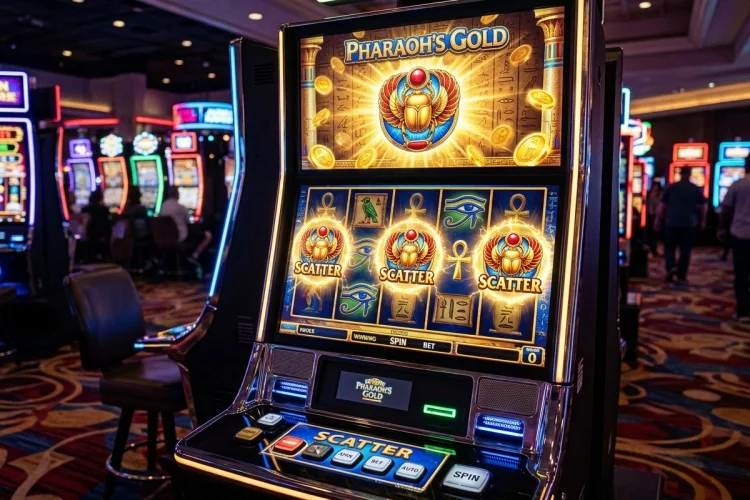
In many games, landing three or more scatters during a single spin opens a free spins feature. Unlike normal symbols, scatters often do not need to appear on the same payline.

For example, a game might require one scatter on reels one, three, and five. Another may simply require three anywhere on the screen.

The exact rule depends entirely on the game’s paytable.

This is why players should check the information panel rather than assume every slot works the same way. Gambling standards in regulated markets generally require game rules and relevant information about winning events to be available to customers before play.

Wild Symbols Can Also Unlock Bonus Features

Wilds are normally used to substitute for regular symbols, but some games give them an additional purpose.

A certain number of wild symbols might activate a bonus round, unlock a multiplier, or move the player into a special feature mode.

Other slots use special wild types such as expanding wilds, sticky wilds, or walking wilds. These may trigger additional mechanics after they appear in specific positions.

The important point is that visual similarity does not mean identical rules.

Two games can both use a golden wild symbol while giving it completely different functions. The paytable remains the most reliable place to understand the actual trigger conditions.

Random Bonus Triggers Do Not Always Need Special Symbols

Some bonuses can begin without an obvious combination of symbols.

These are often called random, mystery, or surprise triggers.

The player may complete a normal spin and suddenly see the game transition into a special round. Behind the scenes, an RNG-based event may have determined that the feature should activate.

The UK Gambling Commission’s technical standards allow games to use bonus or special features with different rules when those features are based on random events. Random outcomes must still be implemented according to the game’s declared rules and probabilities.

Gaming Laboratories International also states that RNG systems should be tested for unpredictability and possible bias.

So a mystery feature may look spontaneous, but it is still governed by programmed game mathematics.

Collection Meters Can Build Toward a Bonus

Some slots show progress over several spins.

You might collect coins, gems, characters, keys, or other objects. Once enough have been gathered, the game may unlock a bonus round.

This creates the impression that the player is gradually moving closer to a feature.

However, there are different types of collection systems.

In some games, collecting a fixed number of symbols genuinely activates the feature. In others, the meter may be partly visual while the final trigger still depends on a random event.

Technical standards have historically recognised bonus systems where players gather specific events or symbols toward a feature, with the trigger conditions expected to be clearly communicated.

The safest approach is to read the game rules instead of assuming that a nearly full meter guarantees an immediate bonus.

Cascades and Consecutive Events Can Trigger Features

Cascading slots add another layer.

When a winning combination disappears and new symbols fall into place, several results can occur from one initial wager.

Some developers connect these cascades directly to bonus mechanics.

For example, completing four consecutive cascades might unlock a free spins round. Another game may increase a meter after every cascade until a bonus threshold is reached.

In this type of design, the trigger may depend on a sequence rather than a single spin result.

The occurrance of each required event still depends on the rules programmed into the game.

This makes cascading bonus systems feel more dynamic, but they are not necessarily easier to trigger than standard scatter bonuses.

Some Games Use Multi-Stage Bonus Triggers

Modern slots increasingly combine multiple conditions.

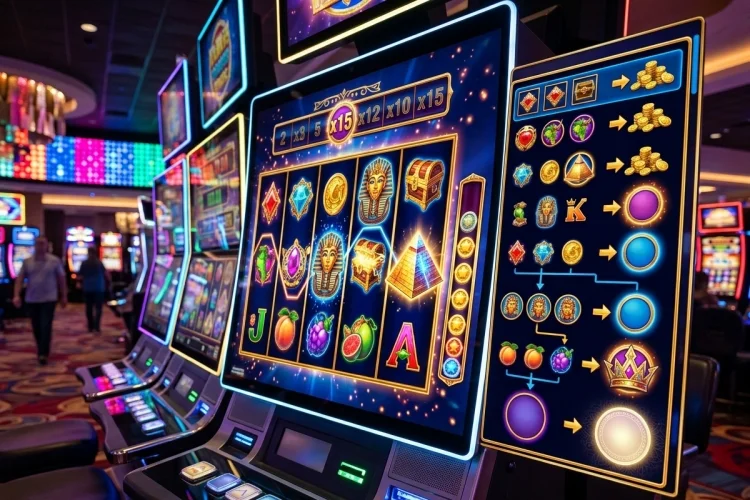
A player might first collect special symbols, then unlock a modifier, and finally land a specific trigger combination.

Other games may introduce several bonus levels.

For example, three bonus symbols might activate eight free spins, while four or five symbols provide additional spins or stronger modifiers.

This is why bonus probability cannot always be understood simply by counting visible symbols.

The mathematical model may include different symbol weights, reel layouts, feature states, and trigger conditions.

GLI-19 notes that chance events in interactive games should follow defined mathematical probabilities, with those probabilities remaining constant unless the game rules indicate otherwise.

Retriggers Extend an Existing Bonus Round

Triggering a bonus does not always mean the feature is finished once the original spins are used.

Many slots include retriggers.

A retrigger happens when the player lands another required combination while already inside the feature. This can award extra free spins, extend a multiplier sequence, or restart part of the bonus.

For example, a free spins round may begin with ten spins. Landing three scatters during the feature could add another five.

Retriggers are usually governed by their own rules.

They may also have different symbol frequencies from the base game because the bonus round itself can use a seperate reel configuration.

Regulatory standards permit bonus rounds to operate under different rules as long as those rules are properly described to the customer.

Does a Bonus Become More Likely After Many Losing Spins?

This is one of the biggest misunderstandings in slot gaming.

Players may feel that a bonus is “due” after a long period without one.

In a standard random system, previous losing spins do not automatically make the next bonus more likely unless the game specifically includes a progression mechanic described in its rules.

UK standards prohibit adaptive behaviour that changes game probabilities simply because of previous wins or losses.

Random gaming machines are also described as maintaining the same odds for the current game regardless of previous wins or losses.

A long dry period therefore does not create a mathematical debt that the slot must repay.

Bonus Frequency and RTP Are Not the Same Thing

A slot can trigger bonuses regularly without necessarily having a higher RTP.

Bonus frequency describes how often a feature may appear. RTP represents the theoretical percentage of stakes returned as prizes across a very large number of plays.

A game may have frequent but relatively small bonuses.

Another might have rare bonus rounds with potentially larger payouts.

These differences contribute to volatility.

The probablity of entering a feature therefore tells you only part of the story. Players should also consider RTP, volatility, paytables, and maximum win information where available.

Understanding How Slot Bonus Rounds are triggered helps separate the visual excitement from the actual game mechanics. Scatters, wilds, random events, meters, cascades, and retriggers can all activate special features, but each slot uses its own rules.

Before playing, check the paytable and feature information so you know exactly what activates the bonus rather than relying on assumptions or previous spins.

How Online Casinos Work Behind the Scenes: From Click to Payout

How Online Casinos Work Behind the Scenes: From Click to Payout

Opening an online casino game feels simple. You log in, choose a slot or table game, place a bet, and see the result within seconds. Behind that quick interaction, however, several technical systems are communicating almost instantly.

Understanding How Online Casinos Work reveals a much bigger operation involving gaming servers, payment processors, identity checks, random number generators, cybersecurity, and regulatory controls.

The visible casino lobby is really just the front end of a complicated digital infrastructure designed to manage games, accounts, transactions, and results.

The Casino Website Is Only the Front End

The colorful lobby players see is essentially the presentation layer of an online casino. It displays games, promotions, account information, balances, and navigation tools, but much of the real work happens elsewhere.

Behind the interface is a casino platform that connects different services. These can include account databases, payment gateways, game providers, bonus engines, fraud detection systems, customer-support tools, and regulatory reporting systems.

Think of it like an airport terminal. Passengers see check-in desks and departure boards, while hundreds of hidden processes coordinate baggage, security, flight schedules, and aircraft movements.

Online gambling platforms operate in a similar way. A single player action may trigger several seperate systems before the result appears on screen.

How Casino Game Servers Process Your Bet

When a player presses the spin button on a slot, the browser does not normally decide the outcome by itself. A request is sent to the gaming system or game provider’s servers.

The server validates the wager, confirms that sufficient funds are available, determines the game result according to the approved game logic, updates the balance, and sends the information back to the player interface.

All of this can happen in fractions of a second.

Modern casinos also frequently integrate games from multiple software studios. Instead of building hundreds of games internally, operators may connect to game suppliers through APIs or game aggregation platforms.

This makes it possible for one casino lobby to offer titles from many different developers while maintaining a single player wallet.

Random Number Generators Determine Digital Game Outcomes

For many digital casino games, one of the most important technologies behind the scenes is the random number generator, or RNG.

An RNG continuously generates values that can be mapped to game outcomes. In a slot, these values may determine which symbols appear. In digital roulette, they can determine the winning number.

In regulated markets, randomness cannot simply be claimed. The UK Gambling Commission states that random results should be demonstrably random, appropriately distributed, and unpredictable. Its standards also prohibit adaptive systems that secretly change probabilities based on previous player activity.

Independent testing laboratories can analyse RNG implementations using statistical tests and source-code reviews. GLI, for example, describes RNG testing as checking systems for unpredictability and potential bias.

This does not mean players are guaranteed to win. Randomness means the result should follow the game’s defined mathematical probabilities rather than being altered because somebody recently won or lost.

RTP and House Edge Come From Game Mathematics

Random outcomes and profitable casino games may sound contradictory, but they are not.

A game can produce genuinely random individual outcomes while still having a mathematical advantage for the operator over a very large number of plays.

Consider a hypothetical slot with a theoretical 96% return to player. That does not mean someone who deposits $100 will receive exactly $96 back. RTP is a long-term mathematical measure based on enormous numbers of game rounds.

Short sessions can produce completely different results because of variance.

Regulated operators may also be required to make information such as game rules, RTP, house edge, or winning probabilities accessible to players. UK regulatory standards specifically require relevant probability or return information to be available before gambling occurs.

Understanding this distinction helps explain why a casino can maintain a business advantage without controlling every individual game result.

Deposits and Withdrawals Pass Through Payment Systems

Another major part of How Online Casinos Work involves money movement.

When someone deposits funds, the casino usually communicates with external payment infrastructure rather than physically processing every bank transaction itself. Payment gateways and processors transmit requests between the casino, banks, cards, e-wallets, or other supported payment methods.

Deposits may appear almost immediately, while withdrawals can involve additional checks.

Behind a withdrawal request, systems may review account verification, transaction history, payment ownership, fraud indicators, bonus conditions, and applicable anti-money-laundering controls before releasing funds.

In some regulated jurisdictions, customer funds are also subject to specific safeguarding requirements. For example, most UK-licensed remote operators that hold player funds must keep them in accounts seperate from ordinary business funds.

That operational detail is almost invisible to players, yet it is a crucial part of the financial infrastructure.

Account Verification Works Behind the Login Screen

Creating an account might take only a few minutes, but casino account systems often perform several background checks.

Depending on jurisdiction, these can involve age confirmation, identity verification, duplicate-account detection, payment verification, sanctions screening, or risk monitoring.

For example, UK rules require remote operators covered by the relevant licence conditions to maintain procedures for customer identification and preventing underage gambling. Age must be verified before customers can perform certain gambling activities.

This is one reason a player may occasionally be asked for documentation even after successfully making earlier transactions.

Automated checks can handle many cases, while unusual activity may be sent to a human compliance team for further review.

Cybersecurity Protects the Invisible Infrastructure

Online casinos handle sensitive information including login credentials, payment data, transaction histories, and account balances. Protecting those systems therefore requires much more than placing an SSL certificate on a homepage.

Security teams may use encryption, access controls, network monitoring, authentication systems, intrusion detection, backups, vulnerability testing, and incident-response procedures.

UK remote gambling security requirements, for example, are based on relevant areas of ISO/IEC 27001:2022 and apply to systems handling critical customer and gambling information.

Security maintainance is continuous because both casino technology and cyber threats evolve over time.

A professional operation therefore involves developers, infrastructure engineers, security specialists, payment teams, compliance personnel, and customer-support staff working together.

Every Spin and Transaction Creates Data

One final layer is record keeping.

Casino platforms typically maintain logs for deposits, withdrawals, balance changes, bets, wins, game sessions, account modifications, and various technical events.

These records help resolve customer disputes and investigate interrupted games. They can also support fraud monitoring, regulatory reporting, technical troubleshooting, and security investigations.

If a connection fails during a game, for example, the platform may use server records to determine whether the wager was accepted and whether a result had already been generated.

The flashy casino interface therefore sits on top of a much less glamorous but extremly important system of databases and audit records.

Learning How Online Casinos Work shows that an online casino is far more than a website full of games. Servers, RNG technology, payment networks, security systems, verification tools, and compliance processes all operate behind each click.

Before using any platform, check its licensing information, game rules, payment policies, and responsible gambling tools so you understand the system you are entering.

Understanding Slot Symbols, Multipliers, and Bonus Features: A Guide

Understanding Slot Symbols, Multipliers, and Bonus Features: A Guide

A modern slot screen can display dozens of symbols, animated meters, multiplier values, and feature indicators at the same time.

The visual presentation is designed to be engaging, but it can make the underlying payout rules difficult to follow. Understanding slot symbols, multipliers, and bonus features begins with the paytable.

This section explains the value of every icon, how combinations are formed, and which conditions activate special rounds. It also reveals whether multipliers are added together, applied separately, or carried between spins.

Learning these details does not allow a player to predict the next result. It simply makes the cost and possible outcomes clearer. A feature-rich slot can still have high volatility, and a large advertised multiplier may apply only under rare conditions.

By examining each part of the paytable separately, beginners can understand how the base game, special symbols, and bonus mechanics interact without relying on assumptions or promotional language.

Identify the Winning System First

Before examining individual symbols, determine how the game creates wins. Common systems include fixed paylines, ways to win, cluster pays, and all-ways formats.

In a payline game, symbols must usually follow a defined path. Ways-to-win titles normally count matching icons across adjacent reels regardless of their vertical positions. Cluster games reward groups of touching symbols.

The winning system affects how wilds and regular icons are evaluated. A wild on the top row may be useful in an all-ways game but irrelevant to a specific payline that runs across the bottom.

The help screen should state the required direction and minimum number of matching symbols.

Compare Low- and High-Paying Symbols

Low-paying symbols generally appear more frequently and provide smaller awards. Higher-value icons normally appear less often but offer larger paytable amounts.

Suppose three card-rank symbols pay 0.20 times the bet, while three premium icons pay 1.50 times the wager. Both are valid wins, but their financial values differ substantially.

Paytables may list awards for three, four, and five matching symbols. Longer combinations generally pay more, although the increase is determined by the game designer.

A player should also check whether the displayed amount represents the total bet or only the amount assigned to one payline.

Evaluate Every Type of Wild

A standard wild substitutes for ordinary paying symbols. Special versions may expand, become sticky, move between reels, or carry a multiplier.

NetEnt’s Wild Wild West: The Great Train Heist includes regular, expanding, 2x multiplier, and spreading wilds during its free-spin modes. Each variation affects the grid differently, despite sharing the wild label.

Sticky wilds remain fixed for a stated period. Walking or moving versions shift to another position after each spin, while stacked wilds occupy several consecutive spaces on one reel.

Check whether the wild has its own payout and which symbols it cannot replace. Bonus and scatter icons are frequently excluded.

Calculate Multipliers Correctly

A multiplier modifies an eligible prize. If a winning combination pays 5 credits and receives a 4x multiplier, its adjusted value is 20 credits.

The calculation becomes more complicated when several multipliers appear. Pragmatic Play’s Gates of Olympus Super Scatter adds multiplier values together at the end of eligible tumble sequences, with individual symbols reaching as high as 500x.

Other games multiply values together or increase a global meter after every win. A 2x and a 3x multiplier can therefore produce 5x, 6x, or separate awards depending on the published rules.

Players should also verify whether the multiplier applies to one line, one symbol, one cascade, or every win during the feature.

Understand Cascades and Tumbling Reels

Cascading or tumbling mechanics remove winning symbols and replace them with new icons. This allows several consecutive evaluations to occur from one initial paid spin.

Some games increase a multiplier after each successful cascade. Pragmatic Play’s Vampy Party, for example, uses a win multiplier that doubles with each tumble and can reach 1,024x.

A cascade ends when no new qualifying combination appears. The multiplier may then reset before the next paid round unless the rules state otherwise.

Cascades can make a game feel highly active, but they do not guarantee that additional symbols will form another win.

Check How Free Spins Are Triggered

Free spins are often activated by scatters, although some games use collected items, mystery events, or randomly awarded features.

Sweet Bonanza requires four to six scatters to trigger ten free spins. During the feature, multiplier symbols can appear and increase qualifying tumble wins.

Other slots award different numbers of spins according to how many scatters land. NetEnt’s Wild Water offers increasing free-spin totals when three, four, or five scatters appear in the base game.

Check whether free spins can be retriggered and whether the feature changes the reels, symbol values, or volatility.

Examine Bonus Games and Collect Features

A bonus game may ask the player to choose an object, spin a wheel, collect symbols, or fill a progress meter.

Money-symbol and collect features normally display cash values or bet multipliers on individual icons. Pragmatic Play’s Triple Pot Diamond uses money symbols and collect mechanics in its base and bonus games, with additional position-based multipliers during free spins.

Feature terms should explain whether uncollected values are lost, whether symbols remain sticky, and what causes the round to finish.

The size of a displayed prize should always be interpreted relative to the selected wager.

Relate Features to RTP and Volatility

An extensive feature list does not automatically mean a game has a high theoretical return. RTP describes the long-term percentage returned across a very large volume of play.

The UK Gambling Commission explains that actual RTP is calculated by dividing total wins by total turnover. Short sessions can differ significantly from the designed percentage.

Volatility describes how prizes are distributed. A high-volatility game may place more of its theoretical return in less frequent bonus rounds or large multiplier combinations.

Players should assess RTP, volatility, stake range, and feature structure as separate pieces of information.

Understanding slot symbols, multipliers, and bonus features starts with identifying the game’s winning system and reading every section of the paytable.

Standard symbols determine ordinary payouts, while wilds, scatters, cascades, and collection mechanics change how those prizes are formed or enhanced.

Multiplier values require particular attention because different games add, multiply, accumulate, or reset them in different ways. A dramatic maximum value may also depend on several rare conditions occurring together.

Review the rules before selecting a stake, and use demonstration mode to observe how the features interact. Compare RTP and volatility separately from the advertised bonus mechanics.

Set strict financial and session limits, avoid increasing wagers to recover losses, and treat every feature as part of an entertainment product rather than a promise of profit.