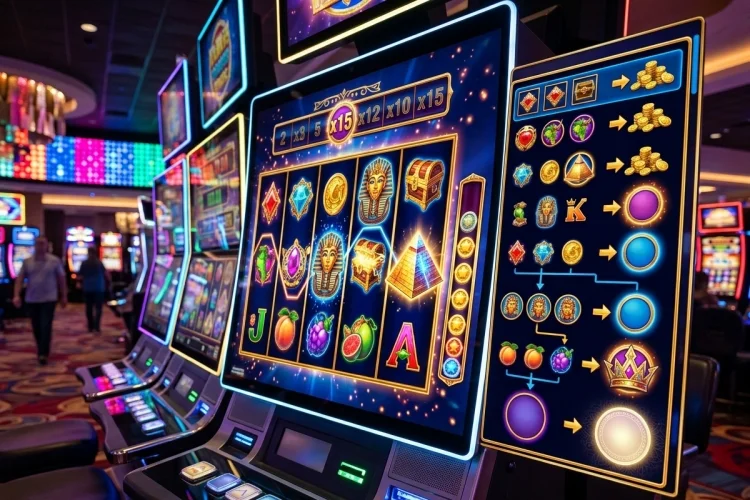
Bonus rounds are often the most exciting part of a modern slot game. One moment you are playing the base game, and the next you may enter free spins, multipliers, expanding symbols, pick-and-win features, or a completely different screen.
Understanding How Slot Bonus Rounds are triggered makes these features much easier to follow. Some depend on scatter symbols, while others use random triggers, collection meters, wild combinations, or special sequences.
Behind the visual effects, however, the game still follows programmed mathematical rules and random-number technology.
Scatter Symbols Are One of the Most Common Triggers
Scatter symbols are probably the most familiar way to activate a slot bonus.
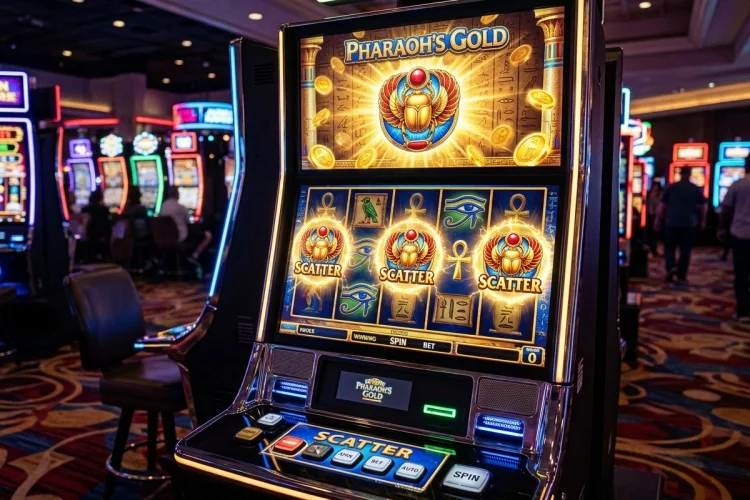
In many games, landing three or more scatters during a single spin opens a free spins feature. Unlike normal symbols, scatters often do not need to appear on the same payline.
For example, a game might require one scatter on reels one, three, and five. Another may simply require three anywhere on the screen.
The exact rule depends entirely on the game’s paytable.
This is why players should check the information panel rather than assume every slot works the same way. Gambling standards in regulated markets generally require game rules and relevant information about winning events to be available to customers before play.
Wild Symbols Can Also Unlock Bonus Features
Wilds are normally used to substitute for regular symbols, but some games give them an additional purpose.
A certain number of wild symbols might activate a bonus round, unlock a multiplier, or move the player into a special feature mode.
Other slots use special wild types such as expanding wilds, sticky wilds, or walking wilds. These may trigger additional mechanics after they appear in specific positions.
The important point is that visual similarity does not mean identical rules.
Two games can both use a golden wild symbol while giving it completely different functions. The paytable remains the most reliable place to understand the actual trigger conditions.
Random Bonus Triggers Do Not Always Need Special Symbols
Some bonuses can begin without an obvious combination of symbols.
These are often called random, mystery, or surprise triggers.
The player may complete a normal spin and suddenly see the game transition into a special round. Behind the scenes, an RNG-based event may have determined that the feature should activate.
The UK Gambling Commission’s technical standards allow games to use bonus or special features with different rules when those features are based on random events. Random outcomes must still be implemented according to the game’s declared rules and probabilities.
Gaming Laboratories International also states that RNG systems should be tested for unpredictability and possible bias.
So a mystery feature may look spontaneous, but it is still governed by programmed game mathematics.
Collection Meters Can Build Toward a Bonus
Some slots show progress over several spins.
You might collect coins, gems, characters, keys, or other objects. Once enough have been gathered, the game may unlock a bonus round.
This creates the impression that the player is gradually moving closer to a feature.
However, there are different types of collection systems.
In some games, collecting a fixed number of symbols genuinely activates the feature. In others, the meter may be partly visual while the final trigger still depends on a random event.
Technical standards have historically recognised bonus systems where players gather specific events or symbols toward a feature, with the trigger conditions expected to be clearly communicated.
The safest approach is to read the game rules instead of assuming that a nearly full meter guarantees an immediate bonus.
Cascades and Consecutive Events Can Trigger Features
Cascading slots add another layer.
When a winning combination disappears and new symbols fall into place, several results can occur from one initial wager.
Some developers connect these cascades directly to bonus mechanics.
For example, completing four consecutive cascades might unlock a free spins round. Another game may increase a meter after every cascade until a bonus threshold is reached.
In this type of design, the trigger may depend on a sequence rather than a single spin result.
The occurrance of each required event still depends on the rules programmed into the game.
This makes cascading bonus systems feel more dynamic, but they are not necessarily easier to trigger than standard scatter bonuses.
Some Games Use Multi-Stage Bonus Triggers
Modern slots increasingly combine multiple conditions.
A player might first collect special symbols, then unlock a modifier, and finally land a specific trigger combination.
Other games may introduce several bonus levels.
For example, three bonus symbols might activate eight free spins, while four or five symbols provide additional spins or stronger modifiers.
This is why bonus probability cannot always be understood simply by counting visible symbols.
The mathematical model may include different symbol weights, reel layouts, feature states, and trigger conditions.
GLI-19 notes that chance events in interactive games should follow defined mathematical probabilities, with those probabilities remaining constant unless the game rules indicate otherwise.
Retriggers Extend an Existing Bonus Round
Triggering a bonus does not always mean the feature is finished once the original spins are used.
Many slots include retriggers.
A retrigger happens when the player lands another required combination while already inside the feature. This can award extra free spins, extend a multiplier sequence, or restart part of the bonus.
For example, a free spins round may begin with ten spins. Landing three scatters during the feature could add another five.
Retriggers are usually governed by their own rules.
They may also have different symbol frequencies from the base game because the bonus round itself can use a seperate reel configuration.
Regulatory standards permit bonus rounds to operate under different rules as long as those rules are properly described to the customer.
Does a Bonus Become More Likely After Many Losing Spins?
This is one of the biggest misunderstandings in slot gaming.
Players may feel that a bonus is “due” after a long period without one.
In a standard random system, previous losing spins do not automatically make the next bonus more likely unless the game specifically includes a progression mechanic described in its rules.
UK standards prohibit adaptive behaviour that changes game probabilities simply because of previous wins or losses.
Random gaming machines are also described as maintaining the same odds for the current game regardless of previous wins or losses.
A long dry period therefore does not create a mathematical debt that the slot must repay.
Bonus Frequency and RTP Are Not the Same Thing
A slot can trigger bonuses regularly without necessarily having a higher RTP.
Bonus frequency describes how often a feature may appear. RTP represents the theoretical percentage of stakes returned as prizes across a very large number of plays.
A game may have frequent but relatively small bonuses.
Another might have rare bonus rounds with potentially larger payouts.
These differences contribute to volatility.
The probablity of entering a feature therefore tells you only part of the story. Players should also consider RTP, volatility, paytables, and maximum win information where available.
Understanding How Slot Bonus Rounds are triggered helps separate the visual excitement from the actual game mechanics. Scatters, wilds, random events, meters, cascades, and retriggers can all activate special features, but each slot uses its own rules.
Before playing, check the paytable and feature information so you know exactly what activates the bonus rather than relying on assumptions or previous spins.