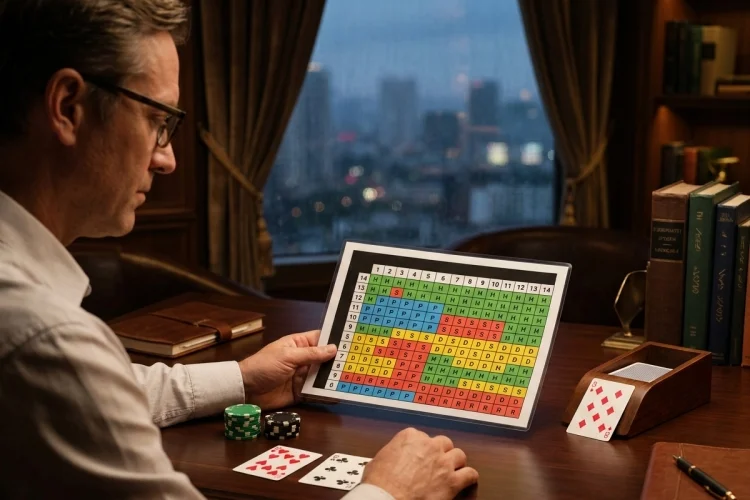

Blackjack Side Bets Explained: Perfect Pairs, 21+3 and More

Blackjack Side Bets Explained: Perfect Pairs, 21+3 and More

Blackjack already gives players several decisions, including hit, stand, double, and split. Many modern tables add another layer before the first hand is even finished: optional side bets with their own payouts and winning conditions.

With Blackjack Side Bets Explained clearly, these extra wagers become much easier to understand. Perfect Pairs may care only about your first two cards, while 21+3 combines your cards with the dealer’s up card.

Other wagers depend on totals or whether the dealer busts. The important point is that every side bet has mathematics separate from the main blackjack hand.

What Is a Blackjack Side Bet?

A side bet is an optional wager made alongside the normal blackjack bet.

The main blackjack wager asks whether your hand can beat the dealer without exceeding 21. A side bet can ask something completely different, such as whether your opening cards form a pair or whether three particular cards create a poker-style combination.

Modern live blackjack tables can offer several at once. Evolution, for example, lists Perfect Pairs/Any Pair, 21+3, Hot 3, and Bust It among optional side bets on some blackjack formats.

The two wagers are settled independently. You might lose the main blackjack hand but win the side bet, or the opposite.

That independance is important because each wager also has its own payout structure and house edge.

Perfect Pairs: Betting on Your First Two Cards

Perfect Pairs is one of the easiest side bets to understand.

It focuses on whether your first two cards have the same rank. Two Queens, for example, create a pair even if they come from different suits.

Some versions then divide qualifying pairs into categories. A mixed-color pair may receive a smaller payout, a same-color pair can pay more, and two completely identical cards from a multi-deck shoe can qualify as a perfect pair.

One eight-deck paytable analysed by Wizard of Odds pays 25:1 for a perfect pair, 12:1 for a colored pair, and 6:1 for another qualifying pair. Under that particular structure, the calculated house edge is about 4.10%.

That figure is not universal. A casino can use another paytable, so always check the game’s actual rules.

The appeal is straightforward: the result is known immediately after your first two cards arrive.

21+3 Turns Blackjack Cards Into a Poker Hand

The 21+3 side bet combines your first two cards with the dealer’s face-up card.

Instead of calculating a blackjack total, the three cards are treated like a three-card poker hand. Depending on the paytable, prizes can be awarded for combinations such as a flush, straight, three of a kind, straight flush, or suited three of a kind.

For example, one eight-deck version analysed by Wizard of Odds pays 100:1 for suited three of a kind, 40:1 for a straight flush, 30:1 for three of a kind, 10:1 for a straight, and 5:1 for a flush. Its calculated house edge is approximately 3.70%.

Other versions have substantially different percentages.

That shows why a large headline payout does not tell you whether the wager is mathematically favourable. Rare outcomes can justify impressive prizes while still leaving the casino with a meaningful long-term advantage.

Hot 3 Is About the Combined Card Total

Hot 3 also uses your first two cards plus the dealer’s up card, but it evaluates them differently.

Instead of poker hands, the bet mainly looks at the combined blackjack-style value of those three cards.

One common paytable awards prizes for totals of 19, 20, or 21, with larger payments for suited 21 and three sevens. In an eight-deck analysis, the house edge for that structure is about 5.40%.

A simple example makes the idea clearer.

Suppose you receive a 10 and 5 while the dealer shows a 6. Together the cards total 21, so the Hot 3 bet could win according to its paytable even though your normal blackjack hand is only 15.

This illustrates why side bets should be thought of as seperate mini-games sharing the same cards.

Is Insurance Really a Side Bet?

Yes, although insurance works somewhat differently from promotional side wagers such as Perfect Pairs.

Insurance is normally offered when the dealer shows an Ace. You are betting that the dealer’s hidden card is worth ten and therefore completes a natural blackjack.

Standard insurance commonly costs up to half of the original blackjack wager and pays 2:1 if the dealer has blackjack.

The wager can sound attractive because it appears to “protect” the original hand. Mathematically, though, it is a separate proposition.

Wizard of Odds calculates a house edge of about 5.9% for insurance in a standard single-deck example without card-counting information.

The exact probability changes with deck composition, which is why insurance behaves differently from simply reducing risk on the original hand.

Think of it as betting on the dealer’s hidden card, not purchasing guaranteed protection.

Dealer Bust Side Bets Work Differently Again

Some blackjack games let you wager that the dealer will exceed 21.

Evolution’s Bust It is an example of this general idea, while several other casino versions pay different amounts according to how many cards are needed before the dealer busts.

A six-deck Buster Blackjack structure analysed by Wizard of Odds, for instance, has payouts that grow when the dealer requires more cards to bust. Under one hit-soft-17 paytable, its calculated house edge is approximately 6.21%.

Again, the details matter enormously.

Another dealer-bust wager with a different payout structure can produce a completely different expected return. Even whether the dealer hits or stands on soft 17 can influence the probability.

Never assume all “dealer bust” bets are mathematically equivalent because their names sound similar.

Side Bets Can Change Your Real Stake Quickly

The table minimum can hide how much you are actually wagering per round.

Imagine a $10 blackjack hand with a $5 Perfect Pairs bet and another $5 on 21+3.

You are now risking $20 before making any later decisions such as doubling or splitting.

Over 20 rounds, that hypothetical player has put $200 into the base wagers but another $200 into side bets if both extras are placed every hand.

That does not mean exactly $400 will be lost. Wins can return money along the way.

It simply shows how quickly optional bets increase wagering volume.

This is particularly relevant because many side bets carry a higher house edge than a well-structured blackjack main game played with correct basic strategy.

The dramatic payouts are part of their appeal, but the additional stake should not be overlooked.

Read the Paytable Before Placing the Bet

The name of a side bet is only the starting point.

Check what qualifies, how much each outcome pays, the number of decks if relevant, and whether multiple prize categories exist.

Great Britain technical standards require applicable gambling rules, prizes, and information about the likelihood of winning to be available before customers commit to gamble.

That is good practical advice anywhere.

For example, two 21+3 tables could use different payouts for the same straight flush. That single change affects expected return even though both buttons say “21+3.”

The paytable tells you what you are really buying with the side wager.

With Blackjack Side Bets Explained, the key idea is simple: each optional wager is effectively a separate game attached to blackjack. Perfect Pairs, 21+3, Hot 3, Insurance, and dealer-bust wagers all use different winning conditions and payout maths.

Before adding one to your hand, read its paytable and consider the extra stake involved. Treat the side bet as optional entertainment rather than assuming it improves the underlying blackjack odds.


How Video Poker Payout Tables Work: A Beginner-Friendly Guide

How Video Poker Payout Tables Work: A Beginner-Friendly Guide

Video poker can look like a slot machine at first, but the information displayed above the cards is much more important than decoration. That grid of hands and numbers tells you exactly which final combinations qualify for prizes and how much each one pays.

Understanding How Video Poker Payout Tables Work is useful because two machines with nearly identical graphics can offer noticeably different mathematical returns.

Once you know how to read poker hands, bet columns, and common labels such as 9/6 Jacks or Better, comparing different versions becomes much easier.

What Is a Video Poker Payout Table?

A payout table, or paytable, lists the winning poker hands available in a particular game and the amount paid for each one.

In Jacks or Better, a typical list begins with a pair of Jacks or higher and progresses through Two Pair, Three of a Kind, Straight, Flush, Full House, Four of a Kind, Straight Flush, and Royal Flush.

A standard full-pay 9/6 Jacks or Better schedule pays 9 units for a Full House and 6 for a Flush, while other common hands pay 4 for a Straight, 3 for Three of a Kind, 2 for Two Pair, and 1 for Jacks or Better.

Those numbers are not probabilities. They describe the payout relative to the amount wagered.

That distinction is essential when reading the table correctly.

Why Games Are Called 9/6 or 8/5

Video poker players often describe a machine with shorthand such as 9/6 Jacks or Better.

The first number normally refers to the Full House payout, while the second refers to the Flush.

So a 9/6 version pays 9 units for a Full House and 6 for a Flush. An 8/5 version pays only 8 and 5 for those same hands.

That may appear like a very small difference.

Mathematically, however, those frequent hands contribute significantly to the game’s theoretical return.

Wizard of Odds calculates a maximum theoretical return of about 99.54% for 9/6 Jacks or Better with optimal play. A common 8/5 version falls to around 97.3%.

This is why reading the paytable matters more than simply recognising the game’s title.

How the Coin Columns Work

Classic video poker machines often display several payout columns.

These traditionally represent wagers of one, two, three, four, or five credits.

Suppose the Flush row pays 6 credits for each credit wagered. The table might therefore show 6, 12, 18, 24, and 30 across the five columns.

Most ordinary hands increase proportionally.

If Three of a Kind pays three credits per unit, betting two credits returns six, while five credits returns fifteen.

This makes the table relatively easy to understand.

However, one important hand often breaks that proportional pattern: the Royal Flush.

That exception is why checking every column is useful rather than assuming all payments scale identically.

Why the Royal Flush Column Looks Different

In many traditional video poker schedules, a Royal Flush receives a disproportionately larger payment at the maximum five-credit wager.

A classic Jacks or Better table can show Royal Flush payments of 250, 500, 750, 1,000, and then 4,000 credits from one through five credits.

Notice the jump.

Four credits produce 1,000, but five credits produce 4,000 rather than 1,250.

That is a special maximum-credit bonus built into the payout schedule.

Wizard of Odds calculates that playing fewer than the maximum coins on this classic structure reduces the theoretical return by roughly 1.36 percentage points because the Royal Flush pays only 250 per coin instead of 800 per coin.

That does not mean players should increase a wager beyond their budget. If a machine uses this structure, selecting a lower coin denomination can be a more sensible way to understand the same mechanic without stretching spending.

Winning Hands Must Match the Game Variant

Not every video poker game pays the same hands in the same way.

Jacks or Better uses a pair of Jacks, Queens, Kings, or Aces as its lowest normal winning hand.

Deuces Wild works differently because all twos act as wild cards. Bonus Poker and Double Double Bonus may pay additional amounts for particular Four of a Kind combinations.

Therefore, copying one payout table and applying it to another game would be a mistake.

The rules and paytable should be read together.

UK Gambling Commission standards require applicable rules, potential payouts, and information about the likelihood of winning to be accessible before customers gamble. Paytables are specifically identified as one acceptable way of communicating potential prizes.

That makes the paytable the practical starting point for understanding a new variant.

Payout Tables and Strategy Are Connected

Video poker differs from a standard slot because the player makes a decision after receiving the first five cards.

You decide which cards to hold and which to discard.

The best choice depends partly on what the paytable rewards.

For example, imagine being dealt four cards toward a Flush plus a low pair.

In full-pay Jacks or Better, the expected value of drawing toward the Flush can make that choice preferable under the correct circumstances. Strategy charts are calculated by comparing the expected returns of all possible holds.

Change the paytable and some borderline decisions can change as well.

That is why using a strategy created for one version on a substantially different payoutt schedule may not be mathematically exact.

Paytable and strategy are connected rather than completely seperate parts of the game.

How Payout Tables Affect RTP

Return to player, or RTP, represents the theoretical long-run portion of money wagered that is returned as prizes.

In video poker, RTP depends on both the payout schedule and how the player makes decisions.

The UK Gambling Commission notes that RTP involving skill should be calculated using an autoplay strategy or a standard or published strategy.

This is especially relevant to video poker.

A 9/6 Jacks or Better paytable has a theoretical return of approximately 99.54% when played optimally.

That figure is not a guarantee for one session.

RTP is a long-term average rather than a promise that $100 wagered today will return exactly $99.54. Gambling Commission guidance similarly explains that theoretical RTP is achieved over a large number of game plays rather than every individual session.

Why Small Payout Changes Matter

Reducing a Full House payout from 9 to 8 may seem minor.

Reducing the Flush from 6 to 5 may also look small.

But these hands occur far more frequently than Royal Flushes.

A Royal Flush is extremely rare, while Full Houses and Flushes contribute repeatedly to long-run returns.

That is why changing recurring mid-level payouts can noticeably alter a game’s mathematical profile.

Wizard of Odds lists 9/6 Jacks or Better at roughly 99.54%, while 8/5 is about 97.3% under optimal play.

The graphics may be identical.

The mathematical value is not.

Checking only the jackpot and ignoring the middle of the paytable is therefore an easy mistake.

Payout Tables Can Also Change Variance

RTP tells you the average theoretical return, but it does not describe exactly how prizes are distributed.

Variance measures how widely results can fluctuate.

For example, standard 9/6 Jacks or Better has lower variance than some bonus-oriented games such as Double Double Bonus because the latter concentrates more return in larger Four of a Kind prizes. Wizard of Odds lists notably different variance figures across these games.

Two games can therefore have fairly similar theoretical returns yet feel very different during a session.

One may deliver more frequent modest wins, while another depends more heavily on rarer premium hands.

This is another reason not to judge video poker from RTP alone.

Check the Table Before Pressing Deal

Before playing any unfamiliar version, look at the paytable first.

Confirm the lowest winning hand, Full House and Flush values, Four of a Kind rules, Royal Flush payout, and whether special bonus hands exist.

Also check the denomination and total wager.

A table displayed in credits can be misleading if you forget how much each credit is worth.

Five credits at $0.25 each means a $1.25 total wager. Five credits at $1 means $5.

The poker hand is the same, but the cash amount is obviously different.

Knowing both the credit payout and denomination prevents basic confussion about what a displayed prize actually means.

Understanding How Video Poker Payout Tables Work makes it easier to compare games before playing. The paytable shows which hands qualify, how many credits they pay, and whether special maximum-credit bonuses apply.

Small changes such as 9/6 becoming 8/5 can materially change theoretical RTP. Before dealing a hand, read the payout schedule, check the denomination, and make sure the strategy matches the exact version.

Video Poker vs Traditional Poker: Strategy and Odds

Video Poker vs Traditional Poker: Strategy and Odds

Video poker and traditional poker both ask players to build valuable card combinations, but the strategic problems are fundamentally different.

One is mainly a mathematical optimisation game, while the other combines mathematics with competition, psychology, and incomplete information.

A detailed video poker vs traditional poker comparison must therefore look beyond the shared hand rankings. In video poker, the player sees five cards and chooses which ones to retain.

The machine then completes the draw and evaluates the final result against a visible paytable. In traditional poker, players rarely know their opponents’ exact cards.

They must interpret bets, estimate possible holdings, compare risk with potential reward, and decide whether to continue. They may even win without holding the best cards when their opponents fold.

Understanding these differences prevents beginners from applying the wrong type of strategy. A strong video poker decision follows a game-specific probability chart, while a strong table-poker decision changes according to the opponents and situation.

Fixed Paytables vs Changing Pots

Video poker uses a fixed payout schedule. Before starting, a player can see which combinations qualify and how many credits each one returns.

This makes the game mathematically analysable. Changing the payout for a full house or flush can alter the overall return and sometimes the correct strategy.

A 9/6 Jacks or Better game, for example, pays nine units for a full house and six for a flush when expressed per unit under its standard maximum-bet table.

Traditional poker has no fixed reward for a straight, flush, or full house. The amount won depends on the pot created by antes, blinds, calls, bets, and raises.

A modest hand can win a large pot, while a royal flush could theoretically win very little if every opponent folds immediately.

Complete and Incomplete Information

Video poker presents a controlled decision. The player knows the initial five cards, the paytable, the number of cards in a standard deck, and the available draw options.

The unseen cards are random, but the decision can be evaluated through probability. Researchers and strategy tools can calculate the expected return of every possible hold for a given version.

Traditional poker is an incomplete-information game. Players know their own cards and any exposed community cards, but not their opponents’ holdings.

They must estimate ranges of possible hands rather than solve only one fixed draw. Position, prior actions, stack depth, and player tendencies all influence the decision.

Why Bluffing Changes Everything

Bluffing is central to many traditional poker formats. A player can bet or raise with a weak hand to represent strength and encourage stronger hands to fold.

This is possible because opponents make independent decisions and cannot see the bettor’s cards. The pot may therefore be won without a showdown.

Bluffing has no role in ordinary video poker. The machine does not interpret behaviour, become nervous, or fold. It simply deals replacement cards and applies the programmed paytable.

Attempting to use intuition about “scaring the machine” or changing betting rhythm does not replace correct card-selection strategy.

Optimal Holds vs Opponent Adaptation

A video poker strategy chart ranks possible holds according to expected value. In a given hand, the highest-ranked matching option identifies which cards should normally be retained.

The correct chart depends on the variant and paytable. A decision suitable for Jacks or Better may be incorrect in Deuces Wild, where all twos act as wild cards, or in Bonus Poker, where selected four-of-a-kind hands receive enhanced payouts.

Traditional poker has fewer permanently correct answers. Pocket aces are extremely strong before the flop in Texas Hold’em, but later decisions depend on the board, bet size, number of opponents, and remaining stacks.

Expert table players continually adapt. Expert video poker players aim to execute the same mathematically correct decisions consistently.

House Edge, Rake, and Player Advantage

Video poker is played against a payout structure established by the operator. Its expected return depends on the paytable, stake configuration, and quality of the player’s decisions.

Full-pay 9/6 Jacks or Better is often cited at approximately 99.54% with optimal play. Actual results can vary dramatically over short sessions, particularly because rare hands such as royal flushes contribute to the theoretical return.

Traditional peer-to-peer poker is different because the house is not normally trying to beat each player’s hand. Instead, the operator commonly earns revenue through rake or tournament fees.

A skilled player may outperform weaker opponents, but must also overcome those charges. The UK Gambling Commission categorises peer-to-peer poker as customers competing against one another rather than against the house.

Variance and Losing Streaks

Both games involve short-term uncertainty. Correct decisions do not guarantee immediate wins.

Video poker variance depends on the chosen version and paytable. Games that award very large amounts for rare combinations can produce long periods without a major payout.

Traditional poker variance comes from card distribution, opponent quality, pot size, tournament structures, and all-in situations. A player can make a statistically favourable decision and still lose the hand.

Because results fluctuate, bankroll limits should be based on affordable entertainment spending rather than expected winnings.

Managing Pace and Bankroll

Video poker allows players to start the next hand immediately. This fast pace can make a small wager per hand accumulate into substantial total stakes.

Traditional poker usually moves more slowly because several players must act. However, individual pots can become much larger than the blinds when multiple raises occur.

Track total money wagered and total time played in both formats. GambleAware recommends setting spending and time limits in advance rather than deciding during an active session.

Avoid increasing stakes to recover losses. A larger wager changes the financial risk but does not make the next deal more likely to win.

Video poker and traditional poker reward different kinds of discipline. Video poker strategy focuses on selecting the correct game, reading its paytable, and making mathematically efficient hold-or-discard choices.

Traditional poker adds betting, bluffing, position, opponent analysis, and changing pot dynamics. Neither format is entirely based on luck or entirely controlled by skill.

Strong decisions can improve long-term outcomes, but random card distribution remains important. Study a variant before playing, use free practice where available, and understand all fees and payout rules.

Establish a fixed bankroll and session limit, then stop when either limit is reached. The right game is the one whose strategic challenge you enjoy without risking money needed for everyday expenses.

Texas Hold’em Rules for Beginners: One Hand Step by Step

Texas Hold’em Rules for Beginners: One Hand Step by Step

The quickest way to understand Texas Hold’em is to follow one complete hand from beginning to end. Every round uses the same basic order, whether you are playing at home, in a casino, or through an online poker room.

This guide to Texas Hold’em rules for beginners follows a six-player no-limit hand. No-limit means a player may wager any amount up to all the chips currently held, subject to minimum-bet and minimum-raise requirements.

The cards and decisions in this example are simplified to demonstrate the rules rather than recommend a perfect strategy. Real poker decisions also depend on position, stack size, opponents, previous betting, and tournament or cash-game conditions.

By learning what happens at each stage, you will understand when players act, how community cards are introduced, and how the winning hand is selected.

Step 1: Setting the Button and Blinds

Assume the blinds are 1 and 2 chips. The player immediately clockwise from the dealer button posts the 1-chip small blind, while the next player posts the 2-chip big blind.

These are forced wagers, so a pot exists before anyone voluntarily enters the hand. After the hand ends, the button usually moves one position clockwise and new players post the blinds.

The dealer then gives each player two cards face down. These are private hole cards and should not be exposed to opponents during the hand.

Step 2: Playing Preflop

Imagine you are dealt A♠ K♦. The first player to the left of the big blind acts first.

That player folds. The next player calls 2 chips, and another player raises to 6. When the action reaches you, the available choices are to fold, call 6, or make a legal raise.

Suppose you call. The small blind folds, the big blind adds 4 chips to call, and the earlier caller adds another 4. Once all remaining players have matched the highest wager, preflop action is complete.

Step 3: Seeing the Flop

The dealer places three community cards face up: K♣ 8♥ 3♠. These three cards are called the flop.

Your A♠ K♦ combines with the king on the board to make one pair – kings – with an ace kicker. Every remaining player can use the same community cards, but their private cards are different.

Postflop action begins with the first active player clockwise from the button. If that player checks and everyone else checks, no additional chips enter the pot. If someone bets, the others must fold, call, or raise to continue.

Step 4: Playing the Turn

The dealer reveals the fourth community card, called the turn. Assume it is the 10♠.

The board is now K♣ 8♥ 3♠ 10♠. Your current hand remains one pair of kings, although additional draws and possible combinations may now exist.

Suppose an opponent bets 8 chips. You call, and the other players fold. Only two players remain, but the pot includes every chip contributed by all players who previously participated.

Step 5: Playing the River

The fifth and final community card is the 3♦. The completed board is K♣ 8♥ 3♠ 10♠ 3♦.

Your final five-card hand is kings and threes with an ace kicker: K-K-3-3-A. Although you hold only one king, the paired board creates two pair.

The opponent checks. You may check and reach showdown immediately, or bet. If you bet and the opponent folds, you win without revealing your cards. If the opponent calls, both hands proceed to showdown.

Step 6: Reaching Showdown

Assume you check. Your opponent reveals K♥ Q♥, producing kings and threes with a queen kicker.

Your ace kicker is higher than the opponent’s queen, so your five-card hand wins. The sixth and seventh available cards are ignored because only the best five-card combination counts.

If both players held the same five-card combination, the pot would be divided. Card suits would not be used to determine a winner.

Legal Bets and Raises

In no-limit Hold’em, the opening bet after the flop is normally at least the size of the big blind. A subsequent raise generally must be at least as large as the previous full bet or raise in that betting round.

For example, if one player bets 10 and another raises to 25, the raise amount is 15. A later full raise would generally need to increase the total wager by at least another 15, making it 40.

Tournament rules can become more complicated when a player moves all-in for less than a full raise. The Poker TDA states that a raise must normally equal or exceed the largest previous full bet or raise in the current round.

What Happens When a Player Goes All-In?

Suppose you have only 20 chips while two opponents each have 100. You may wager your full 20, but you cannot win more than 20 from each opponent.

The main pot contains the chips you are eligible to win. Any additional betting between the larger stacks goes into a side pot that you cannot claim.

Multiple all-ins can create several side pots. The dealer calculates each pot according to how many chips every player contributed.

Two Ways to Win the Pot

A player wins either by holding the best hand at showdown or by causing all opponents to fold. This second method explains why betting matters even when the bettor does not currently hold the strongest cards.

However, beginners should first concentrate on legal actions, hand strength, position, and the betting sequence. Bluffing becomes easier to understand after the fundamental rules are automatic.

A Texas Hold’em hand always follows a recognisable path: blinds, hole cards, preflop betting, flop, turn, river, and showdown. Not every hand reaches every stage because a player wins immediately whenever all opponents fold.

Practise reconstructing your best five-card combination whenever a new community card appears. Remember that you may use two, one, or zero hole cards, and that kickers can decide otherwise similar hands.

Before joining a real-money table, learn the room’s minimum-raise, all-in, and showdown procedures. Start with free-play tables or low-pressure home games, follow the action carefully, and avoid wagering more than your planned entertainment budget.

Online Blackjack vs Live Dealer Blackjack: Speed and Technology

Online Blackjack vs Live Dealer Blackjack: Speed and Technology

Two players can follow the same blackjack rules while experiencing completely different games. One may play against an animated dealer and begin a new hand whenever ready.

The other may watch physical cards being dealt through a real-time studio broadcast. The comparison between Online Blackjack vs Live Dealer Blackjack is largely shaped by technology.

Automated games depend on random number generation, digital graphics, and instant settlement. Live tables combine video streaming with physical casino equipment, professional dealers, card-reading systems, and online betting controls.

These differences influence more than appearance. They affect how quickly rounds progress, whether seats are limited, how technical interruptions are handled, and how much time players receive to make decisions.

Understanding the technology behind each format can help users select an appropriate game. It can also prevent the mistaken belief that one format is automatically more predictable than the other.

Both should operate under clear rules, independent oversight, and legally required fairness standards.

RNG Technology in Online Blackjack

Standard online blackjack uses software to determine and display the cards. A random number generator selects outcomes according to the game’s programmed rules.

In regulated Great Britain markets, RNG results must be demonstrably random through accepted statistical tests. The system cannot alter future winning probabilities simply because a player recently won, lost, deposited, or changed the wager.

The interface then displays animated cards and calculates totals automatically. Available decisions are shown based on the current hand and game rules.

This automation makes the game efficient. There is no physical shuffle, studio delay, or need to wait for another player.

Technology Behind Live Blackjack

Live dealer blackjack uses cameras to broadcast a real table. The dealer works with physical cards while software connects each wager and decision to the correct round.

Studios commonly use several camera views so players can see the dealer, cards, and betting area. Digital overlays show chip values, hand totals, countdowns, and available actions.

UK Gambling Commission standards require licensed live operations to be independently auditable. The guidance includes equipment quality, dealer training, surveillance, game logs, and secure access to the studio.

Technology supports the broadcast and settlement, but the dealer and physical cards remain central to the game result.

Comparing the Pace of Play

RNG blackjack lets players control when the next hand begins. Some games also provide normal and fast animation settings.

Evolution’s First Person Blackjack uses a Deal Now control and permits players to select one or several of five hands. Its design allows a session to progress without waiting for a live table.

Live blackjack follows a shared schedule. Players must submit wagers during the betting window and make decisions before the action timer expires.

Speed Blackjack changes the dealing order by allowing players to submit decisions simultaneously. Faster respondents receive their next cards first rather than waiting for every occupied seat to act in sequence.

Rapid play offers convenience, but more hands per hour can also mean more money wagered.

Technical Delays and Disconnections

An automated blackjack game normally responds as soon as the software receives the player’s instruction. A slow internet connection can still delay the visual display or interrupt communication with the server.

Live blackjack adds video-streaming demands. A weak connection may reduce image quality, create buffering, or make the dealer appear slightly delayed.

Regulatory standards for time-critical remote events aim to prevent players from being unfairly disadvantaged by connection speed. Game descriptions should explain relevant response-time risks.

When a disconnection occurs, players should check their transaction and game history before submitting a replacement wager. The original hand may already have been accepted and resolved.

Interaction and Decision Pressure

Automated blackjack provides a private environment. A player can pause between hands, review a strategy chart, or inspect the paytable without delaying a dealer.

This can benefit beginners who are learning when to hit, stand, split, or double. The absence of a public chat also reduces social pressure.

Live blackjack offers dealer conversation and a shared casino atmosphere. However, decisions must be made within the table’s time limit.

Players should not let the countdown replace careful decision-making. Choosing a standard table rather than a speed version provides more time to check the hand against a strategy chart.

Unlimited and Shared-Hand Tables

A traditional live table may have only several betting positions. Once they are occupied, additional players may need to wait.

Scalable technology has created alternatives. Infinite Blackjack gives an unlimited number of users the same initial two-card hand, but each participant can independently choose how to continue.

This system combines live dealing with virtual personalization. Players see one dealer while their decisions produce different final hands.

Other products use group decisions. Playtech’s Majority Rules Speed Blackjack allows participating players to vote on actions, with the selected decision applied when it receives the required support.

These formats should not be confused with a traditional seven-seat blackjack table.

Game Variants and Added Features

Both automated and live blackjack now include variations beyond the standard game. Players may encounter multiplier cards, free doubles, shared hands, automatic decisions, or multiple side bets.

Evolution’s Lightning Blackjack combines live dealing with RNG-generated card multipliers. Its First Person Lightning version presents a similar concept through animated RNG gameplay.

Infinite Blackjack includes optional Any Pair, 21+3, Hot 3, and Bust It wagers, as well as a Six Card Charlie rule.

Extra features can change payouts, fees, and strategy. The advertised maximum prize does not explain the entire mathematical structure, so the rules must be reviewed before betting.

Tracking Time and Spending

Fast automated rounds can make elapsed time difficult to notice. Live tables provide dealer interaction and natural pauses, but speed formats can still produce many decisions in a short period.

UK remote gambling standards require facilities that help customers keep track of their playing time. Reality checks should display elapsed time and require acknowledgement before further gambling continues in applicable situations.

Players should set a financial limit before opening either format. A fixed stake per hand does not control total spending when the number of hands continues increasing.

Session duration and total wagering should be monitored together.

Online and live dealer blackjack rely on different technologies. Automated games use RNG software and digital animation, creating fast, private rounds that begin on demand.

Live tables use physical cards, professional dealers, cameras, studio controls, and real-time wagering interfaces. Neither system is inherently easier to beat.

Fairness depends on licensing, technical standards, transparent rules, and proper auditing rather than whether the cards are animated or physical.

Compare connection requirements, game speed, decision timers, table access, and modified features before choosing. Start with a standard version, use small stakes, and activate account limits or reality checks.

The best format is the one that allows informed decisions while keeping time and spending under control.

What Is Blackjack Basic Strategy and How Do You Use a Chart?

What Is Blackjack Basic Strategy and How Do You Use a Chart?

A blackjack strategy chart may look overwhelming when viewed for the first time.

Rows contain player totals, columns show dealer cards, and individual boxes are filled with letters such as H, S, D, P, or R. Despite its appearance, the chart is simply a decision map.

Understanding what Blackjack Basic Strategy is becomes easier when each part of the chart is separated.

The system takes the cards in the player’s hand, compares them with the dealer’s visible card, and recommends the statistically strongest permitted action.

Unlike a betting progression, basic strategy does not tell players how much to wager. It also does not attempt to predict which card will appear next.

Its purpose is to improve playing decisions after the initial cards have been dealt. The most important requirement is using a chart designed for the correct rules.

A strategy for a single-deck game may differ from one designed for six decks. The dealer’s treatment of soft 17 and the availability of surrender or doubling after splitting can also change several boxes.

Reading the Player-Hand Rows

The left side of a strategy chart is normally divided into hard totals, soft totals, and pairs. The player must first identify which category describes the hand.

A hand such as 10-6 belongs in the hard-total section as hard 16. A hand containing A-6 belongs in the soft section because the ace can currently count as 11. Two eights belong in the pair section when splitting is permitted.

Players should not select a row based only on the total. Hard 18, soft 18, and a pair of nines can all equal 18, but they offer different options and therefore require separate strategy decisions.

Correctly classifying the hand is the first step toward using the chart accurately.

Finding the Dealer’s Upcard

The columns along the top represent the dealer’s exposed card, normally from two through 10 and ace. After finding the correct player row, move across until it meets the dealer’s column.

The letter in that box identifies the recommended action. Common chart codes include H for hit, S for stand, D for double, P for split, and R or U for surrender.

Some charts use combined instructions. “Double, otherwise hit” means the player should double when the rules permit it but hit when doubling is unavailable. “Surrender, otherwise stand” gives a similar fallback instruction.

Reading the chart therefore requires understanding both the main action and what to do when that option is prohibited.

Example: Hard 16 Against a Dealer 10

Hard 16 against a dealer 10 is one of blackjack’s most uncomfortable situations. Standing leaves the player with a low total against a strong dealer upcard, while hitting can cause an immediate bust.

In many common multi-deck games, basic strategy recommends surrendering when the option is available. If surrender is unavailable, the chart generally recommends hitting.

Neither choice makes the situation favorable. Basic strategy simply selects the decision expected to lose less over many identical situations.

This example demonstrates an important principle: the correct play is not always the action that feels safest. Standing avoids an immediate bust but may still have a worse expected result.

Example: Soft 18 Against Different Dealer Cards

Soft 18 contains an ace and other cards totaling seven, such as A-7. Because the ace can become one, the hand has more flexibility than a hard 18.

Against some weak dealer upcards, doubling may offer the best expected result. Against certain middle cards, standing is usually preferred. Against a strong upcard such as nine, 10, or ace, the chart may recommend hitting under common rules.

This range of decisions explains why memorizing only the player total is insufficient. The dealer’s exposed card changes how aggressively the hand should be played.

The exact soft-18 recommendations may also change according to whether the dealer hits or stands on soft 17.

Example: Splitting Eights and Keeping Tens

A pair of eights creates hard 16, one of the weakest common starting totals. Basic strategy generally recommends splitting the pair, even against several strong dealer cards.

The purpose is not to guarantee two winning hands. It is to replace one poor hand with two separate starting totals of eight, each of which can be improved independently.

A pair of tens creates 20. Although splitting creates two hands beginning with a strong ten-value card, it also gives up an already powerful total. Basic strategy therefore normally recommends standing.

Players sometimes split tens because they hope to receive two additional tens. This decision is driven by the most attractive possible outcome rather than the complete probability distribution.

Why the Chart Changes With Table Rules

The dealer’s soft-17 rule is one of the most important variations. At an S17 table, the dealer stands on all 17s, including a hand such as A-6. At an H17 table, the dealer must hit that soft total.

The H17 rule generally benefits the casino because the dealer has another opportunity to improve a weak 17. Strategy charts therefore include several different decisions depending on which rule applies.

Deck count, doubling restrictions, surrender availability, resplitting rules, and whether the dealer checks for blackjack can also affect the chart.

The table information panel or felt should display the key rules. Players should read them before choosing a chart.

Basic Strategy and Blackjack Payouts

Basic strategy controls playing decisions, but table selection also affects expected value. One of the most important rules is the payout for a natural blackjack.

Traditional blackjack commonly pays 3:2. At that rate, a $10 wager produces $15 in profit when the player receives a natural and the dealer does not.

Some games pay only 6:5. This means the same $10 natural pays $12, reducing the reward for blackjack. Changing from 3:2 to 6:5 can increase the house edge by roughly 1.4 percentage points.

A player following a perfect chart at an unfavorable 6:5 table may face worse conditions than someone selecting a better-paying game.

Practising Basic Strategy Effectively

Start by learning hard totals because they occur frequently. Then study soft hands and pair-splitting decisions.

Practice should focus on recalling the action quickly and accurately rather than predicting whether it will win. A correct double can lose, and an incorrect hit can occasionally succeed. One result does not prove that the underlying strategy was wrong.

Players can use printable charts or training tools where permitted. Some physical casinos allow strategy cards at the table as long as they do not interfere with play, but local rules should be checked.

Keep betting amounts small while learning. Increasing the stake does not improve the accuracy of the strategy.

A Blackjack Basic Strategy chart converts probability calculations into a practical decision table.

Players identify whether their hand is hard, soft, or paired, locate the dealer’s upcard, and follow the instruction where the row and column meet.

The chart may recommend actions that feel uncomfortable because it compares long-term expected results rather than immediate emotions. It also changes with deck count, soft-17 rules, surrender, and doubling options.

Before playing, confirm the table rules and select a matching chart. Practise reading common hands until the process becomes familiar, avoid 6:5 blackjack where better payouts are available, and use a strict gambling budget.

Accurate decisions reduce mistakes but cannot guarantee session profits.