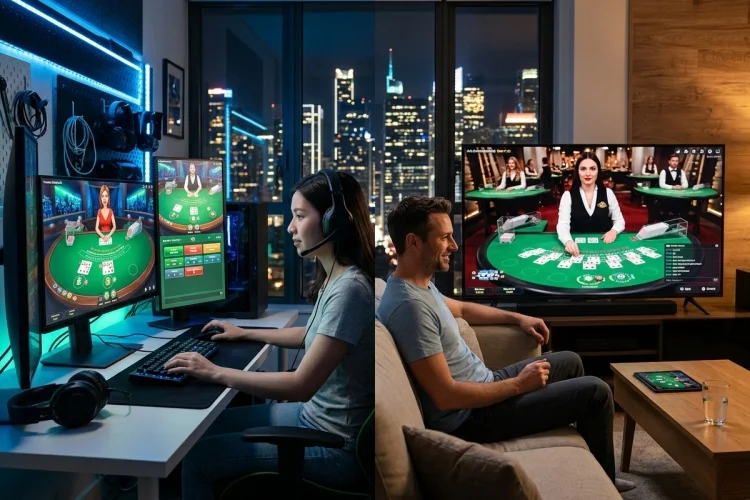
Two players can follow the same blackjack rules while experiencing completely different games. One may play against an animated dealer and begin a new hand whenever ready.
The other may watch physical cards being dealt through a real-time studio broadcast. The comparison between Online Blackjack vs Live Dealer Blackjack is largely shaped by technology.
Automated games depend on random number generation, digital graphics, and instant settlement. Live tables combine video streaming with physical casino equipment, professional dealers, card-reading systems, and online betting controls.
These differences influence more than appearance. They affect how quickly rounds progress, whether seats are limited, how technical interruptions are handled, and how much time players receive to make decisions.
Understanding the technology behind each format can help users select an appropriate game. It can also prevent the mistaken belief that one format is automatically more predictable than the other.
Both should operate under clear rules, independent oversight, and legally required fairness standards.
RNG Technology in Online Blackjack
Standard online blackjack uses software to determine and display the cards. A random number generator selects outcomes according to the game’s programmed rules.
In regulated Great Britain markets, RNG results must be demonstrably random through accepted statistical tests. The system cannot alter future winning probabilities simply because a player recently won, lost, deposited, or changed the wager.
The interface then displays animated cards and calculates totals automatically. Available decisions are shown based on the current hand and game rules.
This automation makes the game efficient. There is no physical shuffle, studio delay, or need to wait for another player.
Technology Behind Live Blackjack
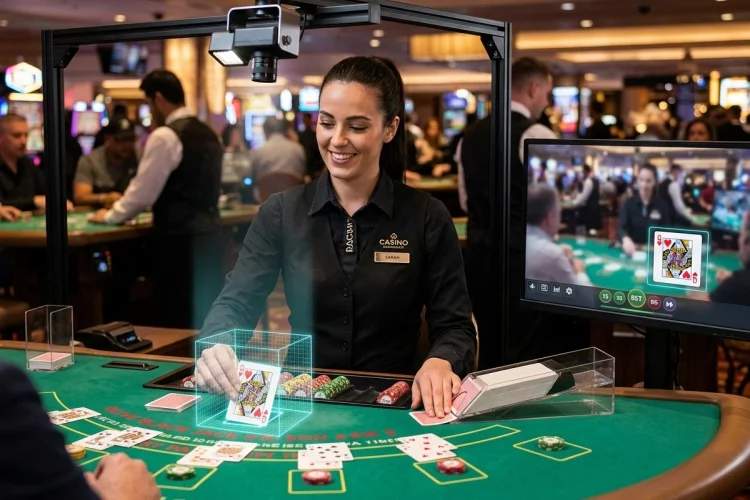
Live dealer blackjack uses cameras to broadcast a real table. The dealer works with physical cards while software connects each wager and decision to the correct round.
Studios commonly use several camera views so players can see the dealer, cards, and betting area. Digital overlays show chip values, hand totals, countdowns, and available actions.
UK Gambling Commission standards require licensed live operations to be independently auditable. The guidance includes equipment quality, dealer training, surveillance, game logs, and secure access to the studio.
Technology supports the broadcast and settlement, but the dealer and physical cards remain central to the game result.
Comparing the Pace of Play
RNG blackjack lets players control when the next hand begins. Some games also provide normal and fast animation settings.
Evolution’s First Person Blackjack uses a Deal Now control and permits players to select one or several of five hands. Its design allows a session to progress without waiting for a live table.
Live blackjack follows a shared schedule. Players must submit wagers during the betting window and make decisions before the action timer expires.
Speed Blackjack changes the dealing order by allowing players to submit decisions simultaneously. Faster respondents receive their next cards first rather than waiting for every occupied seat to act in sequence.
Rapid play offers convenience, but more hands per hour can also mean more money wagered.
Technical Delays and Disconnections
An automated blackjack game normally responds as soon as the software receives the player’s instruction. A slow internet connection can still delay the visual display or interrupt communication with the server.
Live blackjack adds video-streaming demands. A weak connection may reduce image quality, create buffering, or make the dealer appear slightly delayed.
Regulatory standards for time-critical remote events aim to prevent players from being unfairly disadvantaged by connection speed. Game descriptions should explain relevant response-time risks.
When a disconnection occurs, players should check their transaction and game history before submitting a replacement wager. The original hand may already have been accepted and resolved.
Interaction and Decision Pressure
Automated blackjack provides a private environment. A player can pause between hands, review a strategy chart, or inspect the paytable without delaying a dealer.
This can benefit beginners who are learning when to hit, stand, split, or double. The absence of a public chat also reduces social pressure.
Live blackjack offers dealer conversation and a shared casino atmosphere. However, decisions must be made within the table’s time limit.
Players should not let the countdown replace careful decision-making. Choosing a standard table rather than a speed version provides more time to check the hand against a strategy chart.
Unlimited and Shared-Hand Tables
A traditional live table may have only several betting positions. Once they are occupied, additional players may need to wait.
Scalable technology has created alternatives. Infinite Blackjack gives an unlimited number of users the same initial two-card hand, but each participant can independently choose how to continue.
This system combines live dealing with virtual personalization. Players see one dealer while their decisions produce different final hands.
Other products use group decisions. Playtech’s Majority Rules Speed Blackjack allows participating players to vote on actions, with the selected decision applied when it receives the required support.
These formats should not be confused with a traditional seven-seat blackjack table.
Game Variants and Added Features
Both automated and live blackjack now include variations beyond the standard game. Players may encounter multiplier cards, free doubles, shared hands, automatic decisions, or multiple side bets.
Evolution’s Lightning Blackjack combines live dealing with RNG-generated card multipliers. Its First Person Lightning version presents a similar concept through animated RNG gameplay.
Infinite Blackjack includes optional Any Pair, 21+3, Hot 3, and Bust It wagers, as well as a Six Card Charlie rule.
Extra features can change payouts, fees, and strategy. The advertised maximum prize does not explain the entire mathematical structure, so the rules must be reviewed before betting.
Tracking Time and Spending
Fast automated rounds can make elapsed time difficult to notice. Live tables provide dealer interaction and natural pauses, but speed formats can still produce many decisions in a short period.
UK remote gambling standards require facilities that help customers keep track of their playing time. Reality checks should display elapsed time and require acknowledgement before further gambling continues in applicable situations.
Players should set a financial limit before opening either format. A fixed stake per hand does not control total spending when the number of hands continues increasing.
Session duration and total wagering should be monitored together.
Online and live dealer blackjack rely on different technologies. Automated games use RNG software and digital animation, creating fast, private rounds that begin on demand.
Live tables use physical cards, professional dealers, cameras, studio controls, and real-time wagering interfaces. Neither system is inherently easier to beat.
Fairness depends on licensing, technical standards, transparent rules, and proper auditing rather than whether the cards are animated or physical.
Compare connection requirements, game speed, decision timers, table access, and modified features before choosing. Start with a standard version, use small stakes, and activate account limits or reality checks.
The best format is the one that allows informed decisions while keeping time and spending under control.