How Live Casino Game Results Are Recorded from Table to Screen

How Live Casino Game Results Are Recorded from Table to Screen

A live blackjack dealer turns over a card, and almost immediately its value appears on your screen.

A roulette ball settles into a pocket, and the interface identifies the winning number while calculating payouts. It all looks instant, but several systems are working behind the scenes.

Understanding How Live Casino Game Results Are Recorded means following the journey from a physical event at a studio table to digital information stored by the gaming platform.

The exact technology varies between providers, but recognition systems, game software, transaction records, surveillance, and account histories all help connect what happens on camera with the final result.

The Result Begins With a Real Physical Event

Unlike an RNG-only digital table game, a traditional live casino round starts with physical equipment.

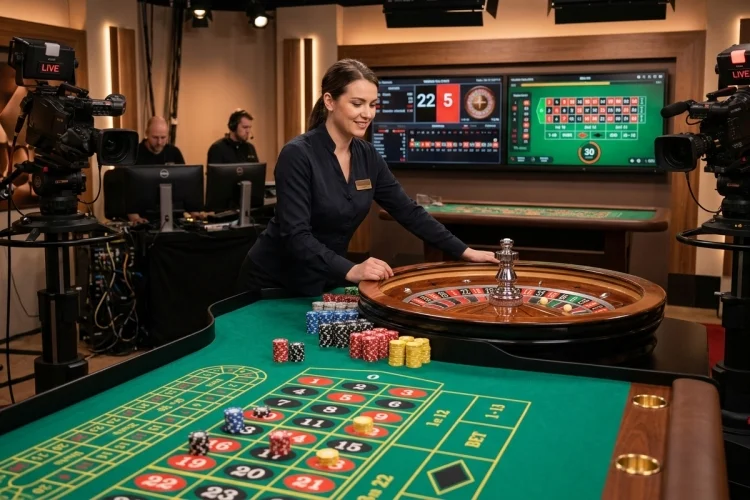
A dealer may draw cards from a shoe, spin a roulette wheel, or manage another real-world game device inside a studio. Cameras stream that action to players in real time.

The physical event determines the basic result. In roulette, for example, the relevant outcome is where the ball finally settles. In blackjack, the values of the physical cards dealt determine the hands.

Regulatory standards recognise this distinction. The UK Gambling Commission requires live dealer operations to be fair and independently auditable, with appropriate equipment, trained croupiers, supervision, and game records.

The digital system then needs to translate that physical outcome into information that software can process.

The Physical Outcome Has to Become Digital Data

Watching a card on video is not enough for an online platform.

The software needs machine-readable data such as “King of Hearts,” “Player total 19,” or “Roulette result 24.”

Different providers can use different technical implementations, including scanners, sensors, video-recognition systems, integrated table equipment, or combinations of these technologies.

A useful public example comes from Evolution’s Speed Roulette. Evolution says the product uses video-based winning number recognition, allowing the system to capture the winning roulette number quickly before the next round begins.

That does not mean every live casino game uses exactly the same technology. The important idea is that the physical result must be converted into digital information before bets can be processsed automatically.

The Betting System Matches Results With Player Wagers

Once the result has entered the digital platform, the betting engine can compare it with wagers placed before betting closed.

Imagine a simplified roulette round.

A player places $5 on red and $2 on number 17. Once the physical wheel produces its result and that outcome is registered digitally, software checks each valid wager against the game’s payout rules.

The result is then used to calculate whether each bet won or lost and how much should be credited.

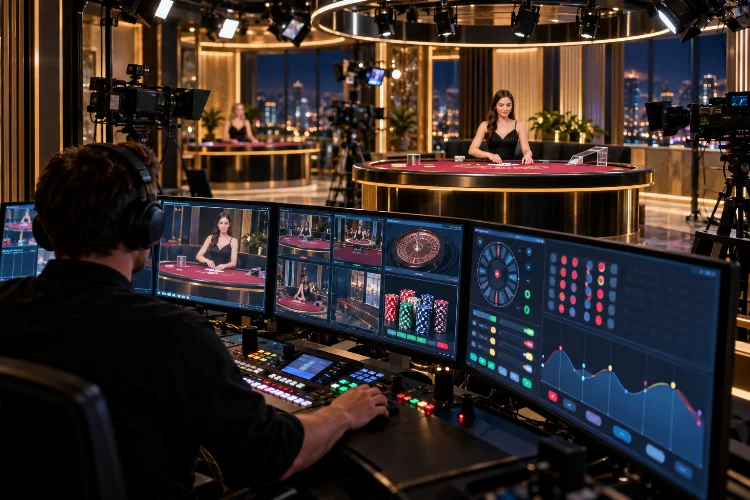
The livestream and betting interface therefore perform different jobs. Video lets the player watch what happened, while the digital layer records bets, understands the result, and settles the financial outcome.

Pragmatic Play describes its live platform as combining video-streaming infrastructure with a back-end system providing operators visibility into table settings, reporting, operational notifications, and other controls.

Game Logs Create a Record of What Happened

A live result does not simply disappear when the next round begins.

Game logs can create a structured record of events associated with each table and round.

The UK Gambling Commission specifically says live dealer studios should maintain game logs and collate game events into statistics that can be analysed for trends connected with game performance, staff, or gaming locations.

That record is useful for several reasons.

Operators can investigate unusual behaviour, review performance, reconcile disputes, and check whether game procedures have been followed properly.

A log is different from a player’s visual memory of the round. It provides system-level information that can be examined later rather than relying on someone remembering what appeared on screen.

This creates a more transparant audit trail around live play.

Video Surveillance Adds Another Layer of Evidence

Digital logs are only one part of live casino recording.

Video can provide another important record because the game itself takes place physically.

UK regulatory guidance states that video surveillance should record dealer activity in enough detail to determine whether dealing procedures and game rules were followed. It also calls for supervision of dealer activity and protection of secure gaming areas.

Suppose a player questions whether a blackjack card was handled correctly.

The system record might show the digital value registered for the hand. Video footage can provide evidence of what physically happened at the table.

This combination is much more useful than relying on a single information source.

Some live roulette products even display slow-motion footage to players. Evolution’s Immersive Roulette, for example, provides high-frame-rate slow-motion replay of the ball settling into the winning number.

Your Account History Records the Financial Side

Players also need access to information about their own gambling activity.

That is slightly different from the studio’s internal game log.

In Great Britain, remote gambling customers must have easy access to at least three months of account and gambling history, while a minimum of 12 months must be available on request. Relevant history should include bets placed, results, and winnings paid.

So a live casino result can exist at several levels.

The studio may maintain operational game records. The gambling platform keeps transaction data. The player’s account history shows the financial effect of the round.

These records should generally agree with each other, although the amount of detail visible directly to a player may be less than what exists in back-end systems.

That distinction is important when someone needs to investigate a disputed hand or spin.

Security Matters Because Results Affect Real Balances

Recorded results are financially important information.

If someone could alter a result after a round, they could potentially affect player balances, payouts, and historical records.

That is why systems storing and processing game outcomes are treated as sensitive infrastructure.

UK Gambling Commission security requirements specifically include electronic systems that store game results or the current state of a customer’s gamble among the critical systems covered by its security framework.

Security controls also apply to systems handling customer balances, authentication information, and communication with other critical infrastructure.

In other words, recording a roulette number is not simply about updating an animation on screen. That number can trigger real financial transactions, so its accuraccy and integrity matter.

What Happens If a Result Looks Wrong?

A delay between video and the digital interface does not automatically mean the game result itself is incorrect.

Live casino depends on cameras, streaming infrastructure, internet connections, game servers, and user interfaces. Different parts of that chain can experience small delays.

What matters is whether the authoritative game record correctly reflects the physical outcome and the player’s accepted wager.

If something genuinely looks wrong, record practical details: table name, approximate time, game round identifier if available, bet amount, and screenshots.

Do not rely only on the result history displayed visually in the lobby. Contact the operator so it can compare account transactions with the relevant game data and, where appropriate, studio records.

A properly recorded game provides information that can be reviewed rather than leaving the dispute as one person’s word against another.

Understanding How Live Casino Game Results Are Recorded reveals that a single round involves much more than a video feed.

Physical outcomes are translated into digital data, matched with bets, stored in game and account records, and supported by surveillance and security controls.

Next time you play a live table, check the game history and account records available to you – they are part of the system connecting the real table to your screen.

How Optical Character Recognition Works in Live Casino Games

How Optical Character Recognition Works in Live Casino Games

A live blackjack dealer turns over a card, and almost immediately its value appears digitally on your screen. The same hand is also recorded by the gaming system, compared with your bet, and used to calculate the result.

That speed is possible because several technologies work together behind the video stream. Understanding How Optical Character Recognition Works helps explain the bridge between a physical casino table and an online interface.

OCR captures visible information from real-world gameplay and converts it into machine-readable data that casino software can process automatically.

What Is Optical Character Recognition?

Optical Character Recognition, usually shortened to OCR, is technology that converts information contained in an image into data a computer can understand.

In everyday applications, OCR might scan a printed document and transform the words into editable digital text. IBM describes OCR as automated data-extraction technology that converts text contained in images into machine-readable information.

Live casino systems apply the same general idea to gaming environments.

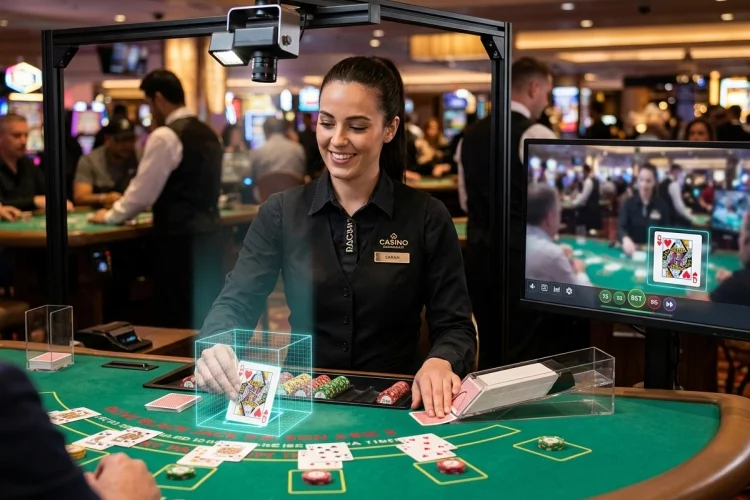
Instead of scanning an office document, the recognition system can analyse information captured from physical game equipment. In card games, for example, visual information associated with a card can be converted into digital game data.

This removes the need for a dealer to manually type every result into the system.

The Process Starts With the Physical Table

A live casino game is still built around real physical activity.

A dealer may shuffle cards, draw from a shoe, deal blackjack hands, or manage a baccarat table while cameras broadcast the action to players.

The video feed serves one purpose: allowing players to watch what is happening.

The gaming system also needs a structured digital version of those events.

Gaming Laboratories International explains that physical transactions in a live dealer environment, including dealt cards and roulette results, can be translated into data through OCR technology. That data allows the software interface to react to the real-world result.

This is the key role of OCR: turning something humans can see into something software can process.

Step One: Cameras Capture the Relevant Information

The recognition process begins with image capture.

Cameras positioned around the gaming table provide clear views of relevant areas. Good lighting, stable positioning, and consistent equipment make visual recognition more reliable.

For a card game, the system needs to identify the information connected to the cards that have been dealt.

The recognition software does not need to understand the entire room like a human observer. It can focus on predetermined zones where important visual information is expected to appear.

This controlled environment is important.

A live casino studio is not simply someone streaming a card table from an ordinary room. The UK Gambling Commission requires regulated live dealer operations under its framework to use suitable equipment, documented procedures, supervision, video surveillance, and secure gaming areas.

Step Two: OCR Converts the Image Into Data

Once the visual information is captured, OCR software analyses it.

Traditional OCR identifies patterns representing letters or numbers. In a specialised live casino environment, the recognition layer is configured around a much narrower group of expected values.

Imagine a blackjack card showing a queen.

The system does not need to recognise thousands of possible words. It only needs to distinguish among the card ranks and other relevant visual information used by that particular game.

That limited set of possibilities can make specialised recognition more practical than completely unrestricted image analysis.

The physical action therefore becomes structured data such as a card rank or another recognised game event.

This conversion can happen fast enough that the player experiences the physical action and the digital interface as one syncronized event.

Step Three: The Game Software Receives the Result

Recognising the card is only part of the process.

The resulting data needs to reach the game platform.

Suppose the dealer exposes a ten-value card during blackjack. Once the event has been identified, the game system can associate that card with the correct seat and hand.

It can then update the digital representation shown to players.

This explains why live casino interfaces can display card values, hand totals, betting information, and game status while a real dealer continues handling physical cards.

The recognition layer effectively acts as a translator between the table and software.

GLI specifically notes that converting physical dealer transactions into digital data enables players to interact with live games through an interface in a way similar to ordinary online games, even though the actual result comes from real physical activity.

Step Four: Software Applies the Game Rules

OCR identifies what happened. It does not independently decide who won.

That distinction is important.

Once the relevant physical results become digital data, gaming software applies the rules of the game.

In blackjack, for example, the system can calculate hand totals and determine outcomes according to the table rules. In baccarat, recorded card values can be used to establish Player, Banker, or Tie results.

The UK Gambling Commission requires gambling systems to accept, process, and settle wagers according to published rules and the rules of the specific game.

So OCR provides an input. The wider gaming platform handles result procesing, settlement, and interface updates.

OCR Helps Reduce Manual Data Entry

Imagine a dealer having to press buttons every time a new card appears.

That would introduce extra work and potential mistakes.

OCR automates much of this transfer.

Instead of manually entering “King of Hearts,” for example, the system can recognise the relevant visual information and send the result electronically.

This becomes especially useful at busy live casino studios where many tables may operate simultaneously.

Automation also helps maintain consistency.

Every recognised event can become part of a structured digital record rather than depending entirely on manual reporting.

However, automation does not eliminate the need for human supervision. Regulated live dealer environments may still use trained staff, monitoring personnel, surveillance, and documented procedures.

OCR and Video Need to Stay in Sync

One technical challenge is synchronization.

Imagine watching the dealer reveal an ace while the interface briefly displays the previous card. Even if the final result is corrected, the experience would be confusing.

For that reason, recognition data, video, betting windows, and game-state information need to remain closely coordinated.

GLI says live dealer testing can include synchronicity tests alongside technical, systems, staffing, and premises evaluations.

The objective is not simply to make the stream look smooth.

The digital representation of what happened at the physical table should correspond with the actual game event.

OCR Does Not Generate the Cards

OCR is sometimes confused with a random number generator.

They perform very different jobs.

In a conventional digital casino game, an RNG may generate the underlying random outcome.

In a traditional live dealer card game, the physical dealing process produces the game event. OCR then helps convert that real-world event into data.

GLI explicitly distinguishes live dealer systems from RNG-driven outcome determination, explaining that the results originate from real-life dealer actions rather than an automated game outcome process.

OCR therefore reads an event. It does not normally invent that event.

That difference is one of the most important concepts when understanding live casino technology.

What Happens If Recognition Goes Wrong?

No technology should be assumed to be completely error-free.

Poor visibility, damaged equipment, communication interruptions, or another technical fault can potentially interfere with a digital system.

This is why live casino infrastructure needs more than OCR alone.

Video records, game logs, supervision, operational procedures, and monitoring can provide additional information when an event needs investigation.

The UK Gambling Commission requires video surveillance of dealer activity and game logs that can be analysed for performance, staff, and location-related trends in regulated live dealer studios.

Its technical rules also state that operators should address system errors affecting customers and take appropriate steps to correct incorrectly settled wagers.

The recognition system is therefore one component inside a broader control framework.

OCR Creates a Digital Audit Trail

Every recognised event can potentially become structured information.

Instead of having only video showing that a card appeared, the system can maintain digital records associated with the game round.

Those records can help support settlement, technical investigation, game monitoring, and auditing.

Regulatory requirements for live dealer environments specifically call for operations to be independently auditable and for game logs to be maintained.

This illustrates why OCR matters beyond convenience.

It transforms physical activity into organised data that computer systems can store and evaluate.

That bridge between physical and digital gaming is one of the core technologies behind modern live casinos.

Learning How Optical Character Recognition Works makes live casino technology easier to understand. Cameras capture physical events, OCR translates visual information into digital data, and gaming software processes that information according to the table rules.

The technology does not replace the dealer or generate the physical result. Next time you watch a live table, notice how quickly the interface reflects every real-world event.

Online Blackjack vs Live Dealer Blackjack: Speed and Technology

Online Blackjack vs Live Dealer Blackjack: Speed and Technology

Two players can follow the same blackjack rules while experiencing completely different games. One may play against an animated dealer and begin a new hand whenever ready.

The other may watch physical cards being dealt through a real-time studio broadcast. The comparison between Online Blackjack vs Live Dealer Blackjack is largely shaped by technology.

Automated games depend on random number generation, digital graphics, and instant settlement. Live tables combine video streaming with physical casino equipment, professional dealers, card-reading systems, and online betting controls.

These differences influence more than appearance. They affect how quickly rounds progress, whether seats are limited, how technical interruptions are handled, and how much time players receive to make decisions.

Understanding the technology behind each format can help users select an appropriate game. It can also prevent the mistaken belief that one format is automatically more predictable than the other.

Both should operate under clear rules, independent oversight, and legally required fairness standards.

RNG Technology in Online Blackjack

Standard online blackjack uses software to determine and display the cards. A random number generator selects outcomes according to the game’s programmed rules.

In regulated Great Britain markets, RNG results must be demonstrably random through accepted statistical tests. The system cannot alter future winning probabilities simply because a player recently won, lost, deposited, or changed the wager.

The interface then displays animated cards and calculates totals automatically. Available decisions are shown based on the current hand and game rules.

This automation makes the game efficient. There is no physical shuffle, studio delay, or need to wait for another player.

Technology Behind Live Blackjack

Live dealer blackjack uses cameras to broadcast a real table. The dealer works with physical cards while software connects each wager and decision to the correct round.

Studios commonly use several camera views so players can see the dealer, cards, and betting area. Digital overlays show chip values, hand totals, countdowns, and available actions.

UK Gambling Commission standards require licensed live operations to be independently auditable. The guidance includes equipment quality, dealer training, surveillance, game logs, and secure access to the studio.

Technology supports the broadcast and settlement, but the dealer and physical cards remain central to the game result.

Comparing the Pace of Play

RNG blackjack lets players control when the next hand begins. Some games also provide normal and fast animation settings.

Evolution’s First Person Blackjack uses a Deal Now control and permits players to select one or several of five hands. Its design allows a session to progress without waiting for a live table.

Live blackjack follows a shared schedule. Players must submit wagers during the betting window and make decisions before the action timer expires.

Speed Blackjack changes the dealing order by allowing players to submit decisions simultaneously. Faster respondents receive their next cards first rather than waiting for every occupied seat to act in sequence.

Rapid play offers convenience, but more hands per hour can also mean more money wagered.

Technical Delays and Disconnections

An automated blackjack game normally responds as soon as the software receives the player’s instruction. A slow internet connection can still delay the visual display or interrupt communication with the server.

Live blackjack adds video-streaming demands. A weak connection may reduce image quality, create buffering, or make the dealer appear slightly delayed.

Regulatory standards for time-critical remote events aim to prevent players from being unfairly disadvantaged by connection speed. Game descriptions should explain relevant response-time risks.

When a disconnection occurs, players should check their transaction and game history before submitting a replacement wager. The original hand may already have been accepted and resolved.

Interaction and Decision Pressure

Automated blackjack provides a private environment. A player can pause between hands, review a strategy chart, or inspect the paytable without delaying a dealer.

This can benefit beginners who are learning when to hit, stand, split, or double. The absence of a public chat also reduces social pressure.

Live blackjack offers dealer conversation and a shared casino atmosphere. However, decisions must be made within the table’s time limit.

Players should not let the countdown replace careful decision-making. Choosing a standard table rather than a speed version provides more time to check the hand against a strategy chart.

Unlimited and Shared-Hand Tables

A traditional live table may have only several betting positions. Once they are occupied, additional players may need to wait.

Scalable technology has created alternatives. Infinite Blackjack gives an unlimited number of users the same initial two-card hand, but each participant can independently choose how to continue.

This system combines live dealing with virtual personalization. Players see one dealer while their decisions produce different final hands.

Other products use group decisions. Playtech’s Majority Rules Speed Blackjack allows participating players to vote on actions, with the selected decision applied when it receives the required support.

These formats should not be confused with a traditional seven-seat blackjack table.

Game Variants and Added Features

Both automated and live blackjack now include variations beyond the standard game. Players may encounter multiplier cards, free doubles, shared hands, automatic decisions, or multiple side bets.

Evolution’s Lightning Blackjack combines live dealing with RNG-generated card multipliers. Its First Person Lightning version presents a similar concept through animated RNG gameplay.

Infinite Blackjack includes optional Any Pair, 21+3, Hot 3, and Bust It wagers, as well as a Six Card Charlie rule.

Extra features can change payouts, fees, and strategy. The advertised maximum prize does not explain the entire mathematical structure, so the rules must be reviewed before betting.

Tracking Time and Spending

Fast automated rounds can make elapsed time difficult to notice. Live tables provide dealer interaction and natural pauses, but speed formats can still produce many decisions in a short period.

UK remote gambling standards require facilities that help customers keep track of their playing time. Reality checks should display elapsed time and require acknowledgement before further gambling continues in applicable situations.

Players should set a financial limit before opening either format. A fixed stake per hand does not control total spending when the number of hands continues increasing.

Session duration and total wagering should be monitored together.

Online and live dealer blackjack rely on different technologies. Automated games use RNG software and digital animation, creating fast, private rounds that begin on demand.

Live tables use physical cards, professional dealers, cameras, studio controls, and real-time wagering interfaces. Neither system is inherently easier to beat.

Fairness depends on licensing, technical standards, transparent rules, and proper auditing rather than whether the cards are animated or physical.

Compare connection requirements, game speed, decision timers, table access, and modified features before choosing. Start with a standard version, use small stakes, and activate account limits or reality checks.

The best format is the one that allows informed decisions while keeping time and spending under control.

How Live Dealer Baccarat Works: A Beginner’s Complete Guide

How Live Dealer Baccarat Works: A Beginner’s Complete Guide

Live dealer baccarat can look like an exclusive game reserved for experienced casino players. The elegant table, formal dealer, rapid card dealing, and unfamiliar terms may initially seem complicated.

In reality, baccarat is one of the easiest table games to follow because players make very few decisions after placing their wagers.

Understanding how live dealer baccarat works begins with one simple objective: predict whether the Player hand or Banker hand will finish closer to nine.

A third option allows a wager on both hands finishing with the same total. The dealer handles the cards, calculates the scores, and follows fixed drawing rules.

The live format adds real-time video, physical cards, digital chips, betting timers, and an interactive interface. It combines the atmosphere of a casino studio with the convenience of playing through a computer or mobile device.

This guide explains the card values, round sequence, third-card procedure, common wagers, and practical considerations beginners should review before entering a live baccarat table.

What Is Live Dealer Baccarat?

Live dealer baccarat is a streamed version of the traditional card game. A professional dealer works from a casino studio or approved physical venue while players place digital wagers through an online interface.

The result is determined with real cards rather than an animated representation. Regulated live dealer operations may be required to use commercial casino-quality equipment, trained croupiers, surveillance, access controls, and auditable game logs.

Many players can join the same table simultaneously. They do not compete against one another because each person independently bets on the result of the Player hand, Banker hand, or Tie.

The Main Objective of Baccarat

The goal is to predict which of two hands will have a value closest to nine. The names “Player” and “Banker” identify the two hands; they do not mean that the customer must always bet on Player or that the dealer personally owns the Banker hand.

Aces are worth one point. Cards from two through nine keep their face values, while tens, jacks, queens, and kings are worth zero.

Only the final digit of a two-digit total is counted. For example, a seven and an eight total 15, but the baccarat score is five. A hand containing a king and a nine is worth nine because the king contributes zero.

How a Live Baccarat Round Begins

A round starts with a limited betting period. Players select a digital chip and place it on Player, Banker, Tie, or an available side-bet area.

When the countdown ends, the interface stops accepting wagers. The dealer usually distributes two cards to the Player hand and two to the Banker hand.

The totals are displayed automatically on the screen. If either opening hand has eight or nine, it is called a natural, and additional cards are generally unnecessary.

The hand closer to nine wins. When both sides finish with the same value, the result is a Tie. Standard Player and Banker wagers are usually returned as a push when a tie occurs rather than being treated as losses.

How the Third-Card Rule Works

Players do not decide whether either hand receives another card. The dealer follows a predetermined table of rules.

The Player hand draws when its first two cards total zero through five and stands on six or seven. A natural eight or nine also stands.

The Banker rule is more detailed because it may depend on both the Banker total and the Player’s third card. For example, a Banker total of zero, one, or two draws, while a total of seven stands. Other totals follow combinations listed in the game rules.

Beginners do not need to memorize the entire chart. The dealer and game system apply it automatically, which is one reason baccarat requires fewer strategic decisions than blackjack.

Player, Banker, and Tie Bets

A winning Player wager commonly pays 1:1. A $10 winning bet therefore returns the original $10 stake plus $10 in winnings.

A standard Banker win also pays close to even money, but traditional commission baccarat generally deducts a 5% commission. The commission exists because the fixed drawing rules give the Banker hand a small mathematical advantage.

The Banker wager has a commonly cited house edge of about 1.06%, compared with approximately 1.24% for Player. An 8:1 Tie bet has a much higher house edge of about 14.36%, despite its attractive payout.

These figures describe long-term mathematical expectations, not what must happen during a short session.

Side Bets and Extra Payouts

Live baccarat tables may include Player Pair, Banker Pair, Perfect Pair, either pair, or bets connected to specific winning totals. These wagers usually depend on the first two cards or a special card combination.

For example, a Player Pair bet wins when the first two Player cards have the same rank. Side-bet names and payouts differ between providers and tables, so one baccarat game may not use the same rules as another.

Larger advertised payouts can be appealing, but they generally correspond to less frequent outcomes. Players should open the paytable and check the probability structure, maximum payout, and eligibility rules before adding side bets.

Beginners may find the three main outcomes easier to understand than covering multiple special combinations in every round.

The Dealer and Digital Interface

The dealer manages the physical cards, announces results, and follows the studio’s dealing procedures. The online software records wagers, displays hand totals, settles payouts, and updates the player’s balance.

Common controls include repeat bet, double bet, clear, favorite bets, game history, and table statistics. Some rooms also provide text chat and multiple camera angles.

Scoreboards known as baccarat roads display previous results through patterns of Player, Banker, and Tie outcomes. They record history but do not reliably predict the next hand because past rounds do not force a future result.

Players should review every wager before the timer expires. The dealer cannot normally change an accidental digital bet after betting has closed.

Choosing and Managing a First Table

Start with standard baccarat rather than a fast or highly modified version. Select a table with a minimum wager that allows the planned budget to cover several rounds.

Speed Baccarat uses shorter betting periods and accelerated dealing. Pragmatic Play describes its version as including rapid gameplay, multiple side bets, traditional baccarat roads, and live statistics.

Faster tables create more wagering opportunities in the same amount of time. They do not improve the odds and may make spending harder to monitor.

Set a financial limit and a session duration before joining. Reality-check facilities can help users track elapsed playing time on regulated services.

Live dealer baccarat works by asking players to predict whether the Player hand, Banker hand, or both hands in a Tie will finish closest to nine.

Card values are simple, two-digit totals use only their final digit, and the dealer automatically follows the third-card rules.

The Banker wager usually offers the lowest standard house edge, although traditional versions deduct a commission from winning Banker bets.

Player bets pay evenly, while Tie and side bets generally involve greater mathematical risk. Before joining a table, review its commission policy, minimum stake, side-bet payouts, and game speed.

Begin with small wagers, set firm time and spending limits, and use baccarat only as affordable entertainment rather than a method of earning income.

A Beginner’s Guide to Live Roulette Tables and Gameplay

A Beginner’s Guide to Live Roulette Tables and Gameplay

Live roulette is designed for players who want to see real casino action without traveling to a physical venue.

A professional dealer, genuine wheel, studio lighting, and live camera feed create an experience that feels different from automated roulette software. Yet joining a live table for the first time can raise several questions.

How are bets communicated to the dealer? What happens when the timer reaches zero? Are the results fair? What should a player do when the game moves faster than expected?

This Beginner’s Guide to Live Roulette focuses on the practical experience of playing at a streamed table. It explains how the studio and digital interface work together, how to choose suitable table limits, and why game pace matters when managing a budget.

Although the visual presentation may resemble a television broadcast, every wager still involves real financial risk.

Players should understand the controls before participating, use only licensed services, and never assume that a professional-looking stream automatically proves that a table is properly regulated.

How the Live Studio Operates

A live roulette table is usually located inside a controlled gaming studio. The dealer works with a physical wheel while cameras broadcast the table, wheel, ball, and result to connected players.

The online interface allows many users to participate in the same round. Players may see a main video feed alongside a digital betting grid, recent-number history, chip controls, and a countdown clock.

Regulated studios are expected to maintain fair dealing procedures, roulette-wheel integrity, security controls, and auditable records. The UK Gambling Commission specifically identifies wheel measurements and dealer processes as important parts of live-game fairness.

Placing Bets Through the Interface

Players begin by selecting a digital chip value. They then click or tap the number, line, corner, column, dozen, color, or other area they wish to cover.

The interface normally displays the total amount committed during the round. Controls may allow a player to undo the latest chip, clear all positions, repeat the previous wager, or double an existing selection.

A wager should be reviewed before betting closes. Accidentally placing several chips on one position can create a larger total stake than intended.

Some tables also offer a racetrack layout for sector wagers based on neighboring wheel positions. Beginners should learn the standard grid first before exploring these additional controls.

Understanding the Betting Timer

The betting period begins after the previous result has been settled. A visible timer gradually counts down while the dealer prepares the next spin.

When the dealer announces “no more bets,” the system stops accepting new wagers. Clicking the layout after that point will not normally add a chip to the active round.

Standard tables provide enough time to select several simple wagers. Speed versions shorten the process considerably. Both Evolution and Pragmatic Play describe Speed Roulette rounds that take approximately 25 seconds from spin to spin.

Faster play means more wagering opportunities within the same period. This can cause a budget to decline more quickly, even when the stake per round remains unchanged.

Choosing Suitable Table Limits

Every table has a minimum and maximum betting range. These restrictions may apply to the total wager, individual betting positions, or both.

A low table minimum does not mean every available wager must be used. A player might place one small chip on red, while another spreads multiple chips across numbers, corners, and dozens.

Before joining, check whether the minimum applies per position or per total round. Also confirm whether inside and outside bets have different maximums.

VIP tables usually offer higher limits and may provide a more exclusive presentation. They do not improve the probability of predicting the winning number, so beginners should prioritize affordable limits over visual status.

Live Roulette Etiquette

Online players do not physically handle the wheel or chips, but table etiquette still matters. Use the chat function respectfully and avoid insulting the dealer or other participants after a losing result.

Dealers control the game procedure but do not control where the ball lands. Blaming them for an outcome misunderstands how roulette works.

Avoid repeatedly demanding personal attention when the dealer is managing a busy table. Chat messages may be moderated, and offensive behavior can lead to restrictions.

Players should also avoid sharing personal details, payment information, account credentials, or contact information in public chat. Customer-service issues should be handled through the casino’s official support channel.

Checking Results and Betting History

After the ball stops, the winning number and color are displayed on the screen. The platform then settles every wager according to the table’s payout rules.

Most interfaces show recent results and personal betting history. These records are useful for confirming the amount wagered or checking whether a payout was credited correctly.

Recent-number statistics do not predict future outcomes. A number that has not appeared for many rounds is not automatically more likely to win next.

When a technical interruption occurs, do not immediately place a replacement wager. Check the account history first to determine whether the original round was accepted, voided, or settled.

Choosing Between Standard and Enhanced Tables

Standard live roulette follows familiar rules and payouts. It is usually the best starting point for learning the wheel, betting grid, and round sequence.

Enhanced variants may add randomly selected multipliers, special bonus numbers, or game-show elements. Evolution’s Lightning Roulette, for example, adds randomly generated Lucky Numbers and Lucky Payouts to traditional roulette betting.

Pragmatic Play’s Mega Roulette also assigns multipliers to selected straight-up numbers. These features can change the payout structure, so the standard 35-to-1 straight-up rule may not apply in the same way to every enhanced table.

Read the paytable and game description rather than choosing a table solely because its advertised maximum payout looks attractive.

Managing Time and Spending

Set a financial limit before entering the live lobby. Divide it by the number of rounds you expect to play to estimate an appropriate average stake.

For example, a $30 entertainment budget intended for approximately 30 rounds suggests an average wager of about $1 per round. Larger bets would shorten the session.

Use session reminders or reality-check tools where available. UK remote gambling standards require accessible reality checks that display elapsed playing time and allow customers to leave the session.

Take breaks away from the screen and never deposit additional money solely to recover a previous loss.

Live roulette combines a real wheel and dealer with an interactive online betting system. Players select digital chips during a timed betting window, watch the physical spin, and receive automatic settlement after the result is confirmed.

Understanding the timer, table limits, interface controls, game history, and etiquette can make a first session less confusing.

Standard tables are generally easier to learn than enhanced or speed versions, which may introduce faster rounds and modified payout features. Before playing, verify the operator’s licence and read the table rules.

Select a low-limit standard game, establish both time and money limits, and review the total wager before every spin. The best first session is one that remains controlled, understandable, and affordable.