

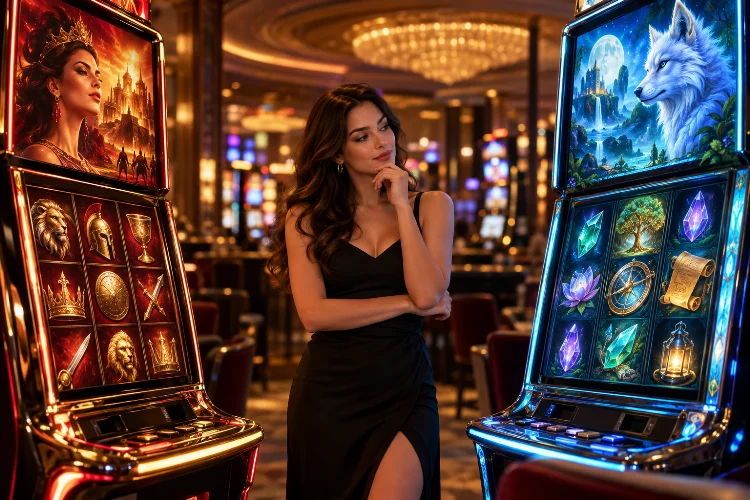
A slot based on a famous movie can instantly feel more interesting than a game featuring characters you have never seen before.
Familiar music, recognizable scenes, and popular personalities create an immediate connection. But does a famous licence actually make the gameplay better?
The Branded Slots vs Original Slots comparison becomes more interesting once you move beyond graphics. Both categories can deliver excellent mechanics, weak features, strong bonus rounds, or forgettable gameplay.
To understand which option suits you better, it helps to compare what each type can offer in terms of immersion, creativity, mathematical design, and replay value.
What Are Branded Slots?
Branded slots are games built around intellectual property that already exists outside the slot itself. The theme might come from a film, television series, musician, celebrity, game show, or another recognizable entertainment property.
For example, IGT’s portfolio includes licensed games connected with well-known properties, while its Wheel of Fortune Slots franchise celebrated its 30th anniversary in 2026.
IGT describes Wheel of Fortune as an early licensed slot concept that developed into a long-running gaming brand.
Playtech has similarly developed slots using licensed DC entertainment properties, incorporating characters, footage, and familiar elements from those franchises.
The attraction is obvious: players already know the world before the first spin begins.
What Makes an Original Slot Different?
Original slots use themes and intellectual property developed specifically for the game or provider.
A developer might create its own fantasy kingdom, mythology-inspired universe, fruit-machine concept, animal characters, or futuristic environment. Some of these titles eventually become recognizable brands of their own.
Games Global, for example, lists numerous proprietary slot franchises alongside a separate category of branded titles.
Without an external franchise to reproduce, developers may have more freedom to design symbols, characters, animations, and bonus mechanics around the mathematical structure of the slot.
That freedom does not guarantee quality. However, it can allow an original title to build its entire presentation around a particular mechanic instead of fitting the mechanic into an existing entertainment licence.
Familiarity Gives Branded Slots an Immediate Advantage
The biggest strength of a licensed slot is usually familiarity.
Imagine choosing between an unfamiliar game and one featuring a television programme you have watched for years. The branded title already carries characters, visual language, music, and emotional associations that the developer does not need to introduce from scratch.
That can make the first session feel more engaging.
Some branded games use actual footage, recognizable audio, or famous imagery. Playtech’s Batman titles, for example, incorporated footage and catchphrases associated with the classic television series while connecting those elements with bonus and jackpot mechanics.
This can make a slot feel more like interactive entertainment than a generic reel game.
However, familiarity can also hide fairly ordinary mechanics. A famous character does not automatically make a basic free-spins feature innovative.
Original Slots Often Have More Room to Build Around Mechanics
An original game does not need to recreate a particular film scene or protect the identity of a licensed character.
That can give designers more room to build the theme around the mechanic itself.
Suppose a developer wants a bonus where the entire reel grid changes shape during play. With an original concept, the characters and environment can be designed specifically around that transformation.
A licensed title can also include innovative mechanics, but the creative team may need to keep the experience consistent with the source material and licensing agreement.
This makes the branded-versus-original comparision less about which category is universally better and more about where the design process begins.
Branded slots often begin with recognizable intellectual property. Original games can begin with the mechanic, visual concept, or mathematical model and build outward from there.
RTP and Volatility Matter More Than the Theme
A common mistake is choosing a slot almost entirely because of its branding.
From a gameplay perspective, RTP and volatility may matter far more.
RTP represents the game’s theoretical long-term return, while volatility helps describe how widely results can vary.
Two beautifully designed branded slots can therefore provide completely diferent experiences if one distributes prizes relatively frequently while the other concentrates more value in rare outcomes.
Regulated games must provide information about how they work and either RTP, house edge, or relevant probabilities where applicable. The UK Gambling Commission specifically requires accessible information about game rules and the likelihood of winning.
The same technical standards apply regardless of whether a game features a famous entertainment licence or an original dragon created by the developer.
Branding changes presentation. It does not remove the underlying mathematics.
Bonus Features Can Make or Break Either Type
Gameplay quality often becomes clearest once the bonus mechanics appear.
A branded title has an opportunity to connect its features to moments from the original entertainment property. A film-themed slot might turn a famous chase scene into a pick feature, while a music-based game could use songs or performance imagery during free spins.
When this works, branding and mechanics reinforce each other.
When it does not, the brand can feel like decoration pasted onto an otherwise standard slot.
Original titles face a different challenge. Players have no existing attachment to the characters, so the mechanics themselves often need to create the excitement.
Developers may rely on expanding symbols, cascading reels, multipliers, collection systems, jackpots, transformations, or other mechanisms to establish an identity.
Neither approach is automatically superior. What matters is whether the bonus feature feels connected to the core game instead of appearing as an unrelated interruption.
Does a Famous Brand Mean Better Production Quality?
Not necessarily, although large licensed projects can certainly receive polished visual treatment.
Licensed brands often come with strong recognizable assets. IGT, for example, describes licensed properties as part of its premium gaming portfolio, alongside progressive and proprietary titles.
Yet production value should not be confused with gameplay depth.
A beautifully animated celebrity slot may still have a very simple mathematical structure. Meanwhile, an original title with less recognizable artwork could contain deeper feature interactions and more interesting bonus progression.
There is also no reason to assume branded slots are inherently more trustworthy.
In regulated markets, gambling software must comply with applicable technical and testing requirements regardless of its theme. UK Gambling Commission rules require relevant gambling software to meet remote technical standards and undergo testing before being offered to customers.
A superhero licence cannot replace technical compliance.
Which Type Has Better Replay Value?
Replay value depends heavily on what keeps a player interested.
Someone who enjoys a particular franchise may return to a branded game because the soundtrack, characters, and atmosphere remain entertaining. Nostalgia can be powerful, especially when a game uses the original property effectively.
Original slots often need to earn replay value through mechanics.
A strong original game might introduce evolving bonus states, different feature combinations, unusual reel layouts, or distinctive visual storytelling. If those systems are interesting enough, the game itself can eventually become a recognizable brand.
IGT has even noted that some of its in-house titles have developed into brands in their own right.
This shows why the boundary between the two categories is not always permanent from a player’s perspective. Today’s unknown original concept could become tomorrow’s familar slot franchise.
So Which Offers Better Gameplay?
There is no universal winner.
Branded slots work especially well when the licence adds something meaningful: authentic visuals, recognizable audio, creative bonus sequences, or a theme the player genuinely enjoys.
Original slots may be more appealing when the priority is unusual mechanics, new visual worlds, or designs unconstrained by an external franchise.
Instead of choosing only by category, compare the game information itself. Check RTP, volatility if provided, paylines or ways-to-win structure, bonus mechanics, maximum prize, and feature rules.
A recognizable name can attract your attention, but those details determine how the game actually plays.
The Branded Slots vs Original Slots debate has no simple winner. Licensed games can provide powerful familiarity and immersion, while original titles often have greater freedom to build a unique identity around their mechanics.
Before choosing, look beyond the artwork. Compare RTP, volatility, features, and game rules, then pick the style that provides the entertainment experience you actually prefer.
