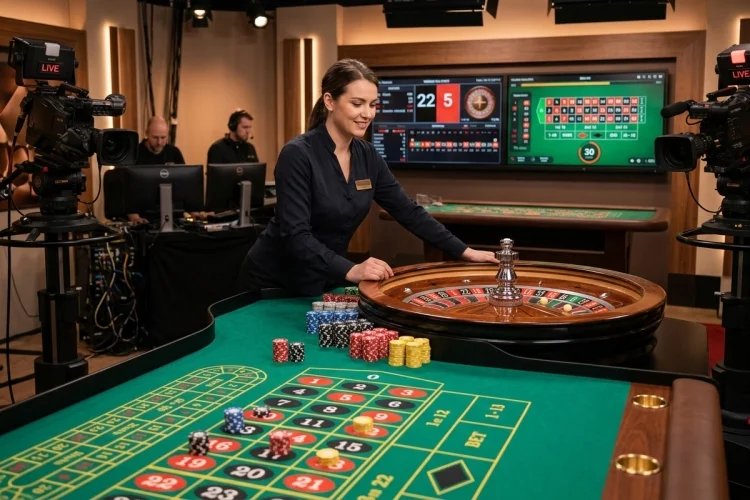
Live dealer baccarat can look like an exclusive game reserved for experienced casino players. The elegant table, formal dealer, rapid card dealing, and unfamiliar terms may initially seem complicated.
In reality, baccarat is one of the easiest table games to follow because players make very few decisions after placing their wagers.
Understanding how live dealer baccarat works begins with one simple objective: predict whether the Player hand or Banker hand will finish closer to nine.
A third option allows a wager on both hands finishing with the same total. The dealer handles the cards, calculates the scores, and follows fixed drawing rules.
The live format adds real-time video, physical cards, digital chips, betting timers, and an interactive interface. It combines the atmosphere of a casino studio with the convenience of playing through a computer or mobile device.
This guide explains the card values, round sequence, third-card procedure, common wagers, and practical considerations beginners should review before entering a live baccarat table.
What Is Live Dealer Baccarat?
Live dealer baccarat is a streamed version of the traditional card game. A professional dealer works from a casino studio or approved physical venue while players place digital wagers through an online interface.
The result is determined with real cards rather than an animated representation. Regulated live dealer operations may be required to use commercial casino-quality equipment, trained croupiers, surveillance, access controls, and auditable game logs.
Many players can join the same table simultaneously. They do not compete against one another because each person independently bets on the result of the Player hand, Banker hand, or Tie.
The Main Objective of Baccarat
The goal is to predict which of two hands will have a value closest to nine. The names “Player” and “Banker” identify the two hands; they do not mean that the customer must always bet on Player or that the dealer personally owns the Banker hand.
Aces are worth one point. Cards from two through nine keep their face values, while tens, jacks, queens, and kings are worth zero.
Only the final digit of a two-digit total is counted. For example, a seven and an eight total 15, but the baccarat score is five. A hand containing a king and a nine is worth nine because the king contributes zero.
How a Live Baccarat Round Begins
A round starts with a limited betting period. Players select a digital chip and place it on Player, Banker, Tie, or an available side-bet area.
When the countdown ends, the interface stops accepting wagers. The dealer usually distributes two cards to the Player hand and two to the Banker hand.
The totals are displayed automatically on the screen. If either opening hand has eight or nine, it is called a natural, and additional cards are generally unnecessary.
The hand closer to nine wins. When both sides finish with the same value, the result is a Tie. Standard Player and Banker wagers are usually returned as a push when a tie occurs rather than being treated as losses.
How the Third-Card Rule Works
Players do not decide whether either hand receives another card. The dealer follows a predetermined table of rules.
The Player hand draws when its first two cards total zero through five and stands on six or seven. A natural eight or nine also stands.
The Banker rule is more detailed because it may depend on both the Banker total and the Player’s third card. For example, a Banker total of zero, one, or two draws, while a total of seven stands. Other totals follow combinations listed in the game rules.
Beginners do not need to memorize the entire chart. The dealer and game system apply it automatically, which is one reason baccarat requires fewer strategic decisions than blackjack.
Player, Banker, and Tie Bets
A winning Player wager commonly pays 1:1. A $10 winning bet therefore returns the original $10 stake plus $10 in winnings.
A standard Banker win also pays close to even money, but traditional commission baccarat generally deducts a 5% commission. The commission exists because the fixed drawing rules give the Banker hand a small mathematical advantage.
The Banker wager has a commonly cited house edge of about 1.06%, compared with approximately 1.24% for Player. An 8:1 Tie bet has a much higher house edge of about 14.36%, despite its attractive payout.
These figures describe long-term mathematical expectations, not what must happen during a short session.
Side Bets and Extra Payouts
Live baccarat tables may include Player Pair, Banker Pair, Perfect Pair, either pair, or bets connected to specific winning totals. These wagers usually depend on the first two cards or a special card combination.
For example, a Player Pair bet wins when the first two Player cards have the same rank. Side-bet names and payouts differ between providers and tables, so one baccarat game may not use the same rules as another.
Larger advertised payouts can be appealing, but they generally correspond to less frequent outcomes. Players should open the paytable and check the probability structure, maximum payout, and eligibility rules before adding side bets.
Beginners may find the three main outcomes easier to understand than covering multiple special combinations in every round.
The Dealer and Digital Interface
The dealer manages the physical cards, announces results, and follows the studio’s dealing procedures. The online software records wagers, displays hand totals, settles payouts, and updates the player’s balance.
Common controls include repeat bet, double bet, clear, favorite bets, game history, and table statistics. Some rooms also provide text chat and multiple camera angles.
Scoreboards known as baccarat roads display previous results through patterns of Player, Banker, and Tie outcomes. They record history but do not reliably predict the next hand because past rounds do not force a future result.
Players should review every wager before the timer expires. The dealer cannot normally change an accidental digital bet after betting has closed.
Choosing and Managing a First Table
Start with standard baccarat rather than a fast or highly modified version. Select a table with a minimum wager that allows the planned budget to cover several rounds.
Speed Baccarat uses shorter betting periods and accelerated dealing. Pragmatic Play describes its version as including rapid gameplay, multiple side bets, traditional baccarat roads, and live statistics.
Faster tables create more wagering opportunities in the same amount of time. They do not improve the odds and may make spending harder to monitor.
Set a financial limit and a session duration before joining. Reality-check facilities can help users track elapsed playing time on regulated services.
Live dealer baccarat works by asking players to predict whether the Player hand, Banker hand, or both hands in a Tie will finish closest to nine.
Card values are simple, two-digit totals use only their final digit, and the dealer automatically follows the third-card rules.
The Banker wager usually offers the lowest standard house edge, although traditional versions deduct a commission from winning Banker bets.
Player bets pay evenly, while Tie and side bets generally involve greater mathematical risk. Before joining a table, review its commission policy, minimum stake, side-bet payouts, and game speed.
Begin with small wagers, set firm time and spending limits, and use baccarat only as affordable entertainment rather than a method of earning income.